
Etsy Best Practices Guide
Learn how to structure, optimize, and master your product data to achieve maximum visibility and success in the world’s largest creative marketplace. This guide is updated twice a year to reflect Etsy’s latest requirements and search algorithm changes.
Table of Contents
TL;DR: What This Guide Covers
- Strategies for improving Etsy’s internal search ranking through strong tagging.
- Essential attributes needed to satisfy Etsy’s listing structure and filters.
- Best practices for high-quality, storydriven product photography.
- Leveraging Plytix to manage and scale unique, customized product data.
- A simple readiness checklist for optimizing shop health and new listings.
What is Etsy?
Etsy is a global online marketplace specializing in unique, handcrafted, vintage, and supply items. It operates as a platform where small businesses, artisans, and collectors sell directly to consumers who are specifically seeking items that are unique, personalized, or cannot be found in traditional retail.
Etsy’s ecosystem thrives on community and transparent selling. Its primary search algorithm favors listings that use all available tags and attributes, maintain a strong shop reputation (reviews), and offer competitive shipping. According to The Ultimate Guide to Etsy Search, the biggest optimization challenge is translating a product’s unique, creative value into searchable, structured data that accurately matches buyer queries.
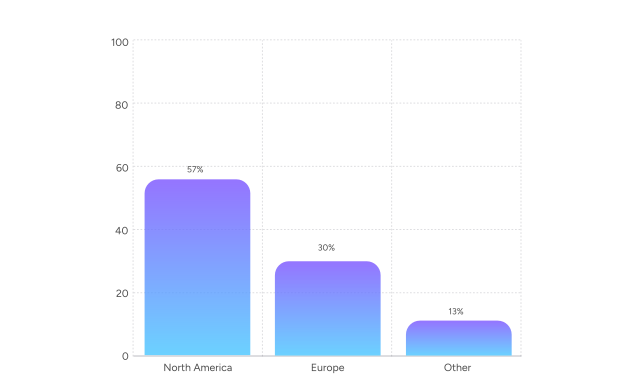
Why should brands focus on Etsy listing optimization?
Optimizing your Etsy listings helps you:
- Achieve a higher ranking and exposure in Etsy’s internal search results by accurately matching buyer queries with tags.
- Improve conversion rates by providing detailed materials, sizing, and personalization options.
- Build a strong Shop Reputation, which is a crucial ranking factor, leading to repeat business and loyal customers.
- Seamlessly manage and update product data across your catalog, even for unique or custom items.
Etsy at a glance: Marketplace overview
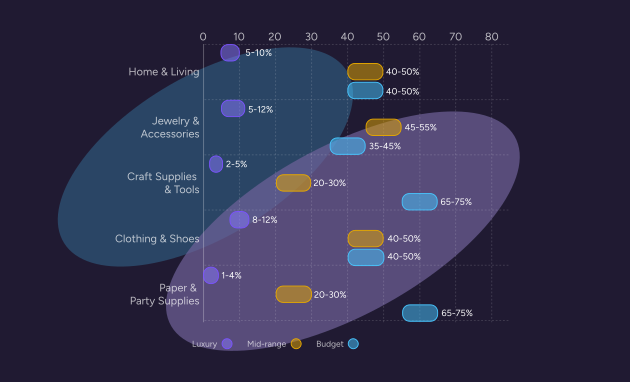
Etsy’s marketplace is defined by high creativity and low barriers to entry, but certain categories, especially those related to decor and personalization, dominate sales volume.
How do Etsy’s top categories influence product data requirements?
Success on Etsy depends less on wholesale cost and more on the ability to sell intangible value (skill, materials, personalization).
Pro tip:
Your Shop Title and About Section are powerful SEO tools. Use them to clearly define your niche (e.g., “Handmade Vegan Leather Bags”) to boost your reputation and search relevance.
Best practices for the product listing
On Etsy, a listing needs to be complete enough for Etsy’s algorithm while also being compelling enough to tell your brand story and justify the price. Every available data field should be utilized.
According to Creating Listings That Convert, the following is the essential information you always need to include in your feed:
Pro tip:
Etsy gives you 13 tags per listing. Use all of them! Tags are one of the most powerful direct ranking factors, acting like keywords for internal search.
Mastering tags and attributes for discoverability
How can I make my listings easy to find in Etsy search?
Etsy’s search prioritizes Relevance and Listing Quality. Relevance comes from matching search queries to your title and tags; Quality comes from fully utilizing all the structured attributes available in the listing form.
Key steps
- Use all 13 tags: As recommended in Keywords 101: Everything You Need to Know, use long-tail phrases (e.g., “personalized leather wallet”) and synonyms to cover varied search queries.
- Optimize the title: Place descriptive keywords at the front. A good title uses: Material + Product Type + Primary Feature + Search Term.
- Fill all attributes: Every item should have material, color, and size information filled out. As stated in How Etsy Search Works, Etsy’s attributes act as filters, and filling them is often more important than keyword stuffing the title.
- Avoid repetition: Do not repeat words in your title that are already in your tags; use the space for new keywords and long-tail variations.
- Write rich descriptions: Use the item description to detail the making process, materials used, and care instructions to build buyer trust.
Optimizing shop reputation and experience for ranking
How can I boost my shop’s trust score and visibility?
Etsy’s ranking system heavily weights non-content factors, specifically your shop’s reputation and the perceived quality of your customer service. This builds buyer confidence, which translates into higher conversion rates.
Core ranking factors:
- Conversion rate: The percentage of visitors who purchase is a major ranking signal. High-quality images and clear descriptions boost this.
- Customer reviews: Maintain excellent review ratings (4.8+) and promptly address any negative feedback.
- Seller standards: As outlined in Etsy’s Service Level Standards, ensure you consistently meet shipping and response time metrics to maintain visibility.
- Shipping experience: Offering fast, free shipping (or rolling the cost into the price) is a powerful ranking incentive, as verified by Etsy’s Shipping Policy Guidelines.
- Product quality: Low return rates and few ‘not as described’ cases signal high product quality, maintaining high visibility.
Pro tip:
Encourage buyers to purchase by clearly stating your processing times and using the Personalization feature. Personalized items often rank better because they signal high intent and unique value.
Best practices for product imagery
Etsy buyers rely on images to convey quality, scale, and the ‘handmade’ story. Your photography needs to be professional yet authentic, showing not just the item, but how it will look in a home or on a person.
What are the main rules for product images on Etsy?
According to Requirements and Best Practices for Images in Your Etsy Shop, Etsy requires clear, high-resolution photos that represent the item honestly. The main image should be simple, while the gallery tells the story.
How should I use imagery to maximize conversion?
Use your photo slots to answer the buyer’s questions visually, building confidence and reducing the risk of returns.
- Use all 10 slots: Utilize the maximum number of images allowed to show texture, size, and packaging.
- Lead with context: The first image should be a stunning, clear shot, ideally showing the item in use (e.g., a jewelry item worn by a model or a mug on a table).
- Show scale and function: Include images with a common object (like a coin or hand) to demonstrate the item’s true size, and show any functional parts (like clasps, zippers, or drawers).
- Process photos: Including one or two photos showing your production process (e.g., the hand stitching process, the painting studio) builds invaluable trust and reinforces the “handmade” value proposition.
- Optimize resolution: Use images that are at least 2000 pixels on the shortest side for excellent zoom quality.
Core Image Rules
Keep the best practices mentioned above when following Etsy’s technical requirements:
Using Plytix to autogenerate your Etsy feed template
How can Plytix simplify Etsy data management?
Plytix PIM automatically fills your Etsy template with live product data, ensuring consistency and saving hours of manual work. Let Plytix handle the heavy lifting. When your Etsy template lives in Plytix, you can map your attributes once, and let live product data fill the fields each time you export, without copy-pasting content.
Why it helps:
- Spot missing attributes and fill gaps in seconds.
- Keep your product data consistent across variants.
- Quickly generate optimized titles, bullets, and translations with AI.
- Export ready-to-upload templates straight to Etsy.
Learn more on how to set up your Etsy feed template in Plytix.
Etsy product launch readiness checklist
Ready to launch your creative inventory? Before clicking “publish,” ensure your shop health and listings are fully optimized to capture high-intent buyers.
Optimization and shop health
- Reputation: Strategy for gathering initial 5-star reviews is prepared
- Shipping: Free shipping offered or shipping cost is clearly calculated and competitive
- Personalization: Option is activated and prompts are clear for all eligible items
- Pricing: Price is competitive but reflects the handmade/unique value
Imagery and media
- Main image: High resolution, professional, and visually distinct for thumbnail view
- Image count: 8-10 photos uploaded showing scale, texture, and close-ups
- Videos: A short video showing the item in use or the making process is included
Core information
- Product identifiers: SKU is present for internal inventory control
- Title: Optimized for search, uses max characters, features primary keywords upfront
- Tags: All 13 tags are used with long-tail keyword phrases
- Attributes: Material, color, size, and relevant options are fully completed
- Variations: All available variants are grouped under one listing
- Descriptions: Clearly detail materials, making process, and care instructions
- Compliance: Seller policies (shipping, returns) are fully published
Feed management with Plytix
- Tags optimized: Plytix Calculated Attributes are correctly mapping data to all 13 tags
- Inventory sync: Stock levels are accurate and synchronized with the PIM
- Template: Exported and ready for upload to Etsy’s Seller Portal