
Zalando Best Practices Guide
Learn how to structure, optimize, and master your product data to achieve top performance, faster fulfillment, and higher visibility on the Zalando platform. This guide is updated twice a year to reflect Zalando’s latest requirements and platform changes.
Table of Contents
TL;DR: What This Guide Covers
- Strategies for maximizing your listing’s Content Score (Zalando’s visibility metric).
- Critical attributes required for apparel, footwear, and accessories.
- Mandatory European compliance steps (EPR, VAT, customs).
- Leveraging Zalando Fulfillment Solutions (ZFS) and zDirect insights.
- A final checklist for fast, high-quality product onboarding.
What is Zalando?
Zalando is Europe’s leading online platform for fashion and lifestyle, specializing in apparel, footwear, accessories, and beauty.
It operates primarily under the Partner Program, which gives brands direct control over their assortment, pricing, and brand presentation via the zDirect portal. Unlike open marketplaces, Zalando functions as a highly curated platform, focusing intensely on aesthetics, brand fit, and a uniform customer experience. According to the Zalando Partner Program Requirements, selling on the platform requires strict adherence to EU regulations, including meticulous management of EANs, sustainability data, and country-specific compliance (EPR, VAT).
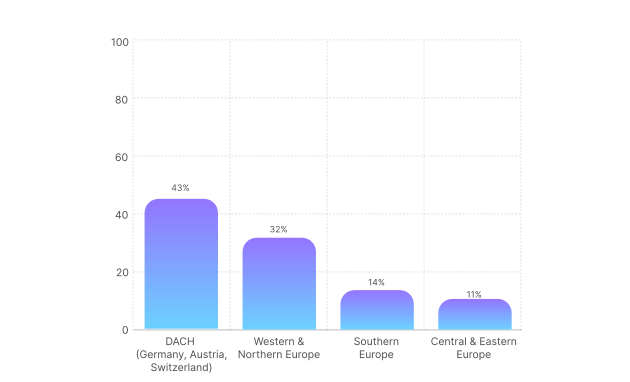
Zalando Revenue Share by European Market
Why should brands focus on Zalando listing optimization?
Optimizing your Zalando listings helps you:
- Achieve a high Content Score, which is Zalando’s main ranking factor and increases visibility in search results.
- Meet strict European compliance requirements, avoiding fines or listing blocks due to missing EPR or VAT data.
- Reduce high return rates (a significant challenge in fashion) by providing detailed size and fit information.
- Seamlessly scale into Zalando’s 25+ European markets using centralized data management.
Zalando at a glance: Marketplace overview
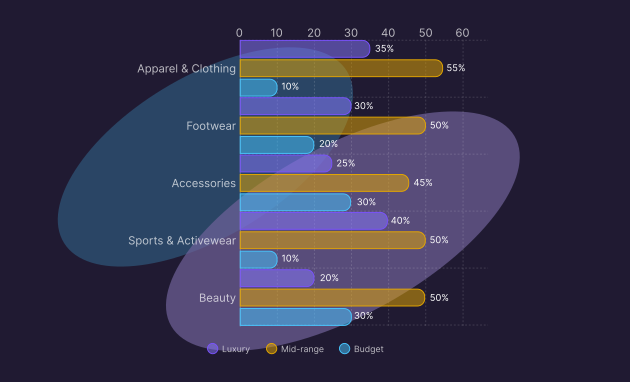
Zalando is a high-value platform, driven by repeat B2C purchases in the fast-moving fashion sector. Its focus has increasingly moved toward the Premium and Designer segments.
How do Zalando’s product mix and category focus influence content strategy?
Zalando’s market is heavily skewed toward apparel and accessories. According to the Zalando Corporate Premium Strategy, there is a notable strategic push into the higher end of the market to meet growing Gen Z and Millennial demand for premium brands.
Pro tip:
Zalando has stated its intent to triple the Gross Merchandise Volume (GMV) of its premium segment. If your brand is in the mid-range or premium tier, prioritize high-quality imagery and compelling brand storytelling, as this is where Zalando is investing most of its marketing resources.
Best practices for the product listing
On Zalando, your product data is constantly evaluated and scored. A high Content Score unlocks maximum visibility. Missing mandatory attributes or low-quality media can result in immediate listing suppression or low placement.
According to the Selling on Zalando Guide, the following fields are mandatory for successful feed processing:
Pro tip:
Your EAN (European Article Number) is mandatory for nearly all products. Without it, your product cannot be processed, classified, or sold on the platform.
Mastering content scoring for visibility
How does Zalando determine my listing’s search ranking?
Zalando uses a Content Score (Content Quality Index) to rank products. As noted in the Selling on Zalando Guide, this system heavily favors listings that meet all mandatory and recommended criteria, as rich data is the primary defense against returns.
Key steps
- Complete all attributes: Treating recommended attributes (like neck shape, sleeve length, or heel height) as mandatory is essential to achieving a perfect Content Score.
- Use precise sizing: Always provide a clear Size System and Size Code. Accurate size information is the number one defense against high return rates in fashion.
- Map material composition: Provide detailed and accurate material composition (e.g., 85% Polyester, 15% Elastane) for compliance and filtering.
- Provide rich imagery: Upload images for all required views (main, front, back, detail, model) to fulfill Zalando’s strict aesthetic guidelines.
- Localize content: Translate titles and descriptions into the local language of each target market for maximum engagement and trust.
Optimizing logistics and compliance for ranking
How can I ensure smooth operations and avoid compliance violations?
Operational excellence and regulatory compliance are non-negotiable on Zalando. Fulfillment speed and meeting EU standards directly affect your ability to sell and your standing on the platform.
Core ranking factors:
- Fulfillment solution: Listings using Zalando Fulfillment Solutions (ZFS) often benefit from priority logistics and faster shipping visibility, which aids ranking.
- Return policy: All items must offer free returns and a minimum 100-day return period. This is essential for the customer experience.
- EPR compliance: As detailed in Zalando Platform Compliance, you must provide valid Extended Producer Responsibility (EPR) registration numbers for required markets (e.g., Germany, France) to avoid listings being blocked, as this is a strict legal requirement in the EU.
- Delivery standards: Maintain fast dispatch times and high delivery success rates, especially if using Partner Fulfillment.
Best practices for product imagery
In fashion, images are everything. Zalando has stringent, style-specific rules for photography to maintain a cohesive, high-fashion editorial look across the entire platform.
What are the main rules for product images on Zalando?
According to the Zalando Partner Program Requirements, images must be high-quality, uniform, and show the product clearly on a model (where required) or as a clean studio shot. Unlike other marketplaces, Zalando often requires specific angles and views for different product types.
How should I use imagery to maximize conversion?
Your imagery must meet Zalando’s aesthetic standards while accurately conveying fit, movement, and texture, reducing the likelihood of a sizerelated return.
- Adhere to the style guide: Use high-resolution images (minimum 1000 x 1000 pixels) on a plain white or light neutral background.
- Utilize specific views: For shoes, the main image must show the left shoe. For apparel, submit model shots showing movement and fit (front, back, side views).
- Show scale and fit: Use a model for apparel and provide the model’s height/size in the attributes to help customers visualize the fit.
- Highlight texture: Include dedicated close-up detail shots of material, weave, or embroidery.
- Include rich media: Use video content to show clothing movement or how a bag hangs, as this significantly improves engagement and reduces returns.
Core Image Rules
Keep the best practices mentioned above when following Zalando’s technical requirements:
Using Plytix to autogenerate your Zalando feed template
How can Plytix simplify Zalando feed management?
Plytix PIM automatically fills your Zalando template with live product data, ensuring consistency and saving hours of manual work. Let Plytix handle the heavy lifting. When your Zalando template lives in Plytix, you can map your attributes once, and let live product data fill the fields each time you export, without copy-pasting content.
Why it helps:
- Spot missing attributes and fill gaps in seconds.
- Keep your product data consistent across variants.
- Quickly generate optimized titles, bullets, and translations with AI.
- Export ready-to-upload templates straight to Zalando.
Learn more on how to set up your Zalando feed template in Plytix.
Zalando product launch readiness checklist
Ready to go live in Europe? Before pushing your catalog to zDirect, verify your content and compliance are 100% complete.
Feed management with Plytix
- Attributes mapped: All custom fields linked to Zalando’s taxonomy
- Compliance data: EPR and VAT fields centralized and validated
- Content score optimization: Missing attributes identified for enrichment
- Template: Exported and ready to upload to the zDirect portal
Imagery and media
- Main image: High resolution, professional studio shot (left shoe for footwear)
- Visuals: 5+ images provided, including model and detail shots
- Model data: Model height and size provided in attributes
- Videos: Included for high-value or complex apparel/accessories
Core feed and listing information
- Identifiers: EAN/GTIN included for every product
- Attributes: All Mandatory and Recommended attributes (e.g., material, fit, sleeve type) completed
- Sizing: Size code and Size System (e.g., EU/UK) accurately mapped
- Title and description: Localized/translated for each target market
- Pricing: Set and converted into local currency (EUR, DKK, GBP, etc.)
Compliance and operations
- VAT: Valid VAT IDs provided for all active selling countries
- EPR: Valid EPR registration numbers provided for mandatory markets (Germany, France, etc.)
- Fulfillment: Logistics method confirmed (ZFS or Partner Fulfilled)
- Return policy: Free returns and a 100-day return period offered