
BUYER'S GUIDE AND SENTIMENT ANALYSIS
Plytix vs. Pimberly: Pricing, reviews, and why teams switch
A mid-market buyer’s guide · Updated October 2026
We log and analyze every conversation we have with prospects, partners, and customers. Between January 2024 and October 2026, Pimberly came up more than 150 times across 39 deals with 37 companies that compared both platforms. Most of them were UK and Nordic mid-market brands, wholesalers, and merchants, and many found its pricing built for a much bigger business. They kept asking the same three questions: What will it cost for our catalog? Will the whole team actually use it? And how easily can we get our product data out and share it? Here’s what they told us.
HOW WE BUILT THIS REPORT
Pimberly insights: CRM notes, meetings, and call transcripts from January 2024 to October 2026 · Plytix quotes and ratings: G2 and Capterra reviews and published Plytix customer stories · Privacy: names and companies withheld
Top 3 reasons companies choose Plytix over Pimberly
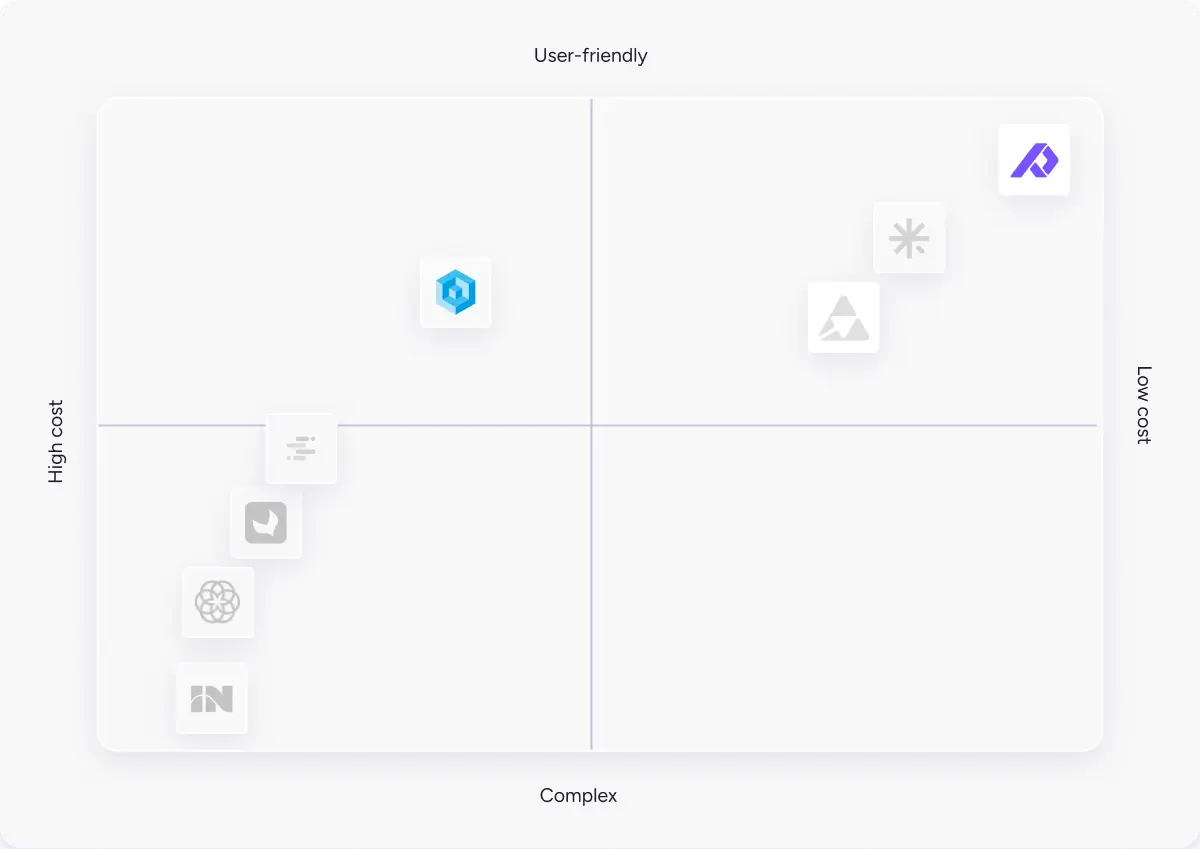
Whenever a team chose Plytix over Pimberly, it came down to the same three things: a price that fits the catalog they actually have, a platform the whole team can use, and product data that’s easy to export and share with customers.
Plytix vs. Pimberly: built for very different catalog sizes
Pimberly is a PIM and DAM sold on quote, usually licensed in large SKU bands and set up with consulting help, with a strong workflow engine and many UK merchants and manufacturers as customers. Plytix is the platform mid-market brands, wholesalers, and distributors use to centralize, enrich, and publish product information. You can see what it costs for your exact SKU count on our website, and your whole team can work in it without outside help.
When teams migrated from Pimberly to Plytix, three frustrations came up again and again.
Enterprise pricing for a mid-market catalog
Pimberly is priced for enterprise catalogs, which made cost the most common complaint from mid-market buyers. Brands with a few thousand SKUs were quoted prices set for a much larger business, and add-ons raised the total further.
PIMBERLY: WHAT BUYERS REPORTED
Buyers described five-figure annual quotes for catalogs of 2,000 to 5,000 SKUs, licenses sized for 50,000 SKUs, and features like media attribution, portals, and data sheets priced as extras.
- A UK building-products supplier with about 2,000 stocked products was quoted roughly £50,000 for the first year and £30,000 a year after that.
- A Nordic bag brand with about 1,000 live Shopify products was paying for a 50,000-SKU license.
- A UK safety-equipment manufacturer with 16,000 SKUs was asked for an extra £30,000 a year to add media attribution.
“It looks like about £50,000 for year one, and then £30,000 every year afterwards, whereas what you’ve just been saying is more like £10,000 a year, plus the onboarding.”
“We currently, I think, pay for 50K SKUs, and we have like 3,000 with kind of all the old stuff. Live on site, we have around 500. Within Shopify, we have 1,000. But our license is for 50K. It’s for like large enterprises, isn’t it? … It’s not made for our kind of size of business.”
“We actually spoke with Pimberly. But in all honesty, it was just so expensive for the budget that we have … When I told [the FD] the price between what Pimberly were suggesting to what you guys are, then his eyes lit up.”
PLYTIX: HOW IT WORKS
- Plytix publishes every plan and add-on, priced by your actual SKU count, so you can see what your team would pay before you talk to sales. Catalogs over 25,000 SKUs get a custom quote.
- Priced by your real catalog. You pay for the SKUs you have, not a band sized for a bigger company.
- Users never change the price. Every plan comes with unlimited seats and unlimited storage.
- Add-ons with unlimited use. Feed Management, Brand Portals, and Product Data Sheets are priced by SKU count, so one Brand Portals add-on covers as many portals as you need.
- Month to month, proof of concept first. Billing is month to month, and you can run a proof of concept on your own data, with every feature available, before you sign.
“Plytix was by far the most user-friendly and cost-effective option for us.”
“On pricing, Plytix is very good value compared with enterprise PIM systems.”

Too complex for the whole team to use
Pimberly is a capable PIM, but buyers said it takes a trained specialist to run. That left the rest of the team working from exports instead of in the system itself.
PIMBERLY: WHAT BUYERS REPORTED
Buyers described a complex, heavily customized system with a big learning curve, where one or two people did the work and the rest of the team only saw the outputs. Several felt it was built for a much bigger company than theirs.
- A UK licensed-gifts wholesaler with about 5,000 SKUs wanted a platform its sales team could use directly, instead of one that ran in the background, and switched to Plytix.
- A Nordic bag brand’s ecommerce team, who had only ever used Pimberly, said it worked but was too complicated and too big for their catalog.
- A UK bike-parts distributor comparing both found Plytix easier and friendlier to use, and saw Pimberly as having a big learning curve.
“We use Pimberly. However, we’ve come to realize Pimberly is actually a bit too big for our needs. So we’re looking for a more kind of slimline, more cost-effective PIM solution … Pimberly is just something that happens in the background and people are in contact more with the outputs of it rather than the software itself.”
“We are currently on Pimberly, but a little bit of an overkill for the catalog that we have … So we are trying to find an option that is not necessarily Pimberly complicated or advanced, but needs some help with managing our product data.”
PLYTIX: HOW IT WORKS
Plytix is built so your marketing, sales, and ecommerce teams can all work in it, not just one trained admin.
- Unlimited seats. Everyone who touches product data can work in Plytix, at no extra cost.
- No implementation partner needed. We help you map your data model and configure your channels, and your team takes it from there.
- Automations and Plytix AI. Set up your own rules and generate or translate product content without writing code.
- A named Account Manager. You get a named Account Manager from day one.
“One of the biggest advantages was how smoothly the rollout went. From initial setup to having our product data available in the system, the implementation was completed remarkably fast, allowing our team to start working productively almost immediately.”
“I use this tool every day and it’s been so easy from the get-go.”
“We can have certain colleagues responsible for as little or as much of the PIM as we want with just a few clicks.”
Customer result: Universal Components
A UK distributor of truck and trailer parts with more than 16,000 products, where the marketing team now builds catalogs and manages product data in Plytix instead of the ERP and spreadsheets.
Slow, unreliable exports
Exporting product data from Pimberly was slow and unreliable for several buyers. Large exports could take hours or fail partway through, and sharing images and data with customers took workarounds.
PIMBERLY: WHAT BUYERS REPORTED
Buyers described flat CSV exports that took hours and sometimes crashed, a channels screen that could delete an export without warning, and images shared with customers as lists of download links.
- A UK safety-equipment manufacturer with 16,000 SKUs had its developers build an internal tool to restructure Pimberly’s exports.
- A UK gifts wholesaler’s sales team could only share product images with customers as a list of links to download one at a time.
“It’s quite expensive, and it’s not very good, in my opinion … there are some major issues with it, mostly around reliability. The exports fail sometimes. They’re extremely slow to a ridiculous degree … Pimberly can take for up to six hours sometimes, and it will quite often either restart several times during that process, or it will just crash and give up halfway through.”
“One of the woes that we’ve had to deal with in Pimberly is just managing that in the user interface. Their channels interface is broken. You can click on an export and it will just delete it with no other feedback.”
PLYTIX: HOW IT WORKS
Plytix gives your webshop, marketplaces, and customers their own ready-made ways in, so product data goes out without workarounds.
- Native apps for Shopify and BigCommerce. Sync products straight to your store with the Shopify or BigCommerce add-on.
- Feed Management for everywhere else. Marketplaces, retailers, and distributors each get the feed format they need, with unlimited feeds on the Feed Management add-on.
- Brand Portals for customers. Customers download or export the images and product data they need themselves, in bulk, with unlimited portals on the Brand Portals add-on.
- API on every plan. Connect your ERP and other systems through the API, with webhooks on Pro and Enterprise.
“Using channels was a complete gamechanger for populating masterdata files for our retailers. It saved us both time and money plus decreased our time to market.”
Capterra review
“The combination of PIM and DAM in one platform is very effective, and the ability to create structured feeds for different sales channels saves a lot of manual work.”
Capterra review
“We also need to export data on a regular basis and Plytix offers many ways we can do that to meet our customers needs.”
G2 review
Customer result: Alltrade Tools
A maker of tools for cars, homes, and garages with about 5,000 products and 50 people working in Plytix.
Plytix and Pimberly, side by side
What changed for teams that switched
Switching from Pimberly is simpler than you think
Your product data is already structured in Pimberly, so you start from organized data, not spreadsheets.
Export it, and we help you map it across.