
BUYER'S GUIDE AND SENTIMENT ANALYSIS
Plytix vs. Sales Layer: Pricing, reviews, and why teams switch
A mid-market buyer’s guide · Updated October 2026
We log and analyze every conversation we have with prospects, partners, and customers. Looking at the last 24 months, Sales Layer came up more than 300 times across 56 deals where teams compared both platforms. Most buyers who chose between the two picked Plytix, and the same reasons kept coming back: pricing they could see, support that stayed with them, and a platform that delivered what was shown. Here’s what buyers told us, so you can compare both platforms and make the choice that’s right for your team.
HOW WE BUILT THIS REPORT
Sales Layer insights: CRM notes, meetings, and call transcripts from October 2024 to October 2026 · Plytix quotes and ratings: G2 reviews and published Plytix customer stories · Privacy: names and companies withheld
Top 3 reasons companies choose Plytix
Whenever a team chose Plytix, the same three reasons came up in the conversation. They reflect what we prioritize as a company: pricing you can see, support that continues long after the sale, and an honest, no-pressure sales process.
Plytix vs. Sales Layer: two very different business models
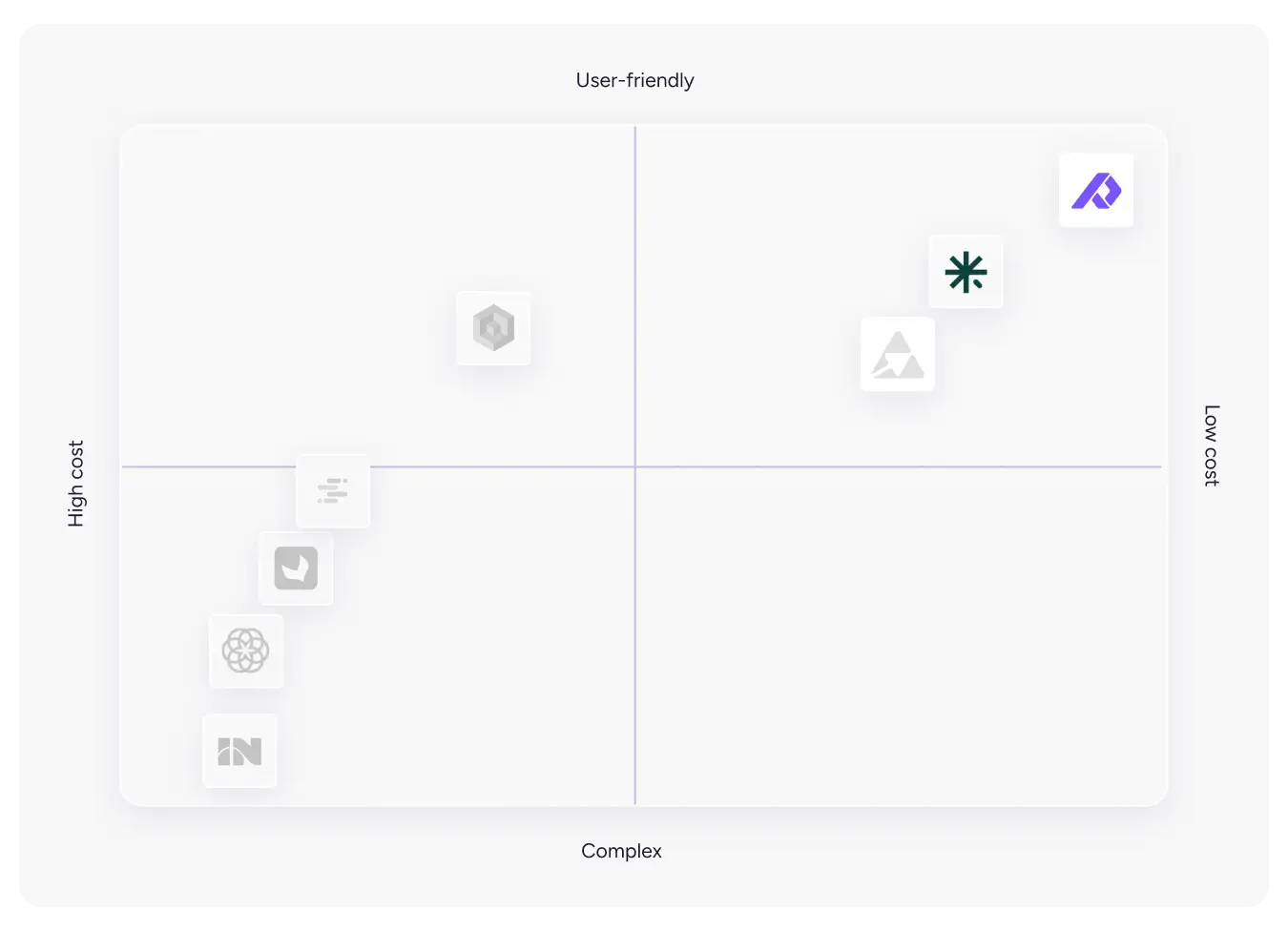
Both Plytix and Sales Layer are established players in the PIM market, but they are built on fundamentally different business models and architecture principles. While Sales Layer targets complex enterprise stacks with variable, quote-based pricing, Plytix focuses on giving growing mid-market brands a powerful, intuitive platform at a transparent, published price.
When teams migrated from Sales Layer to Plytix, three frustrations came up again and again.
Hidden cost and scale limits
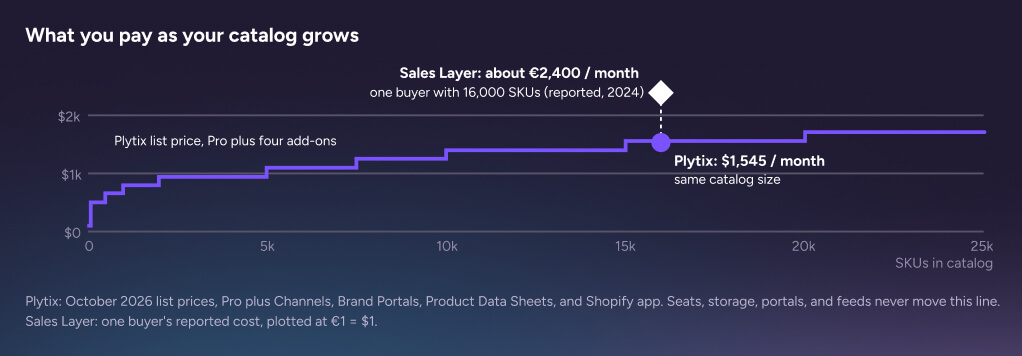
The most common complaint buyers raised about Sales Layer, by a wide margin. The starting price is rarely the problem. The bill grows as soon as your catalog, your team, or your channel list does.
SALES LAYER: WHAT BUYERS REPORTED
Buyers described limits on SKUs, users, connectors, and storage, along with additional modules introduced after signing.
- An irrigation manufacturer kept only 4,000 of its 30,000 products in the platform to control costs.
- A US furniture manufacturer saw its monthly fee rise from $1,700 to $2,200.
“We keep running into things along the way where, oh no, users weren’t unlimited, that’s another module and 100 dollars more.”
“We’ve also paid extra for the allowance of numbers of SKUs… the limit on users and also the limit on connectors as well. We’ve got no scope for another connector.”
PLYTIX: HOW IT WORKS
Plytix publishes every plan and add-on, priced by SKU count. You see the full cost before you speak to sales, and it does not rise when your team grows.
- Unlimited seats and unlimited file storage on every plan.
- Add-ons priced by SKU count, not usage. One Brand Portals add-on covers as many portals as you need.
- Month-to-month contracts that can be canceled at any time.
“Plytix helped us grow sales while saving £15k a year on printed catalogs!”
“Continuous support, continuous improvements, simple interface, no hidden prices…”

Connector reliability issues
A Sales Layer integration that looks complete in a demo can fall short in production. Buyers told us the gaps surfaced only after go-live, when they were most expensive to fix.
SALES LAYER: WHAT BUYERS REPORTED
Buyers described connectors that synced product data but not category structure, or that failed and required manual correction.
- A US medical supplies distributor with 150,000 SKUs sought a replacement after repeated BigCommerce sync problems.
- A US industrial manufacturer moved to Plytix after its WooCommerce integration did not work as expected.
“It can make changes from our product level, but from our category level, we can’t do anything. We want to make sure that it works fully and not half integrated.”
“There have been several instances where we have wasted days because of sync issues.”
PLYTIX: HOW IT WORKS
Plytix pairs native ecommerce apps with self-service feeds, and proves the full sync on your own store before you commit.
- Native apps for Shopify and BigCommerce.
- Channels for marketplaces, retailers, and distributors, with no limit on the number of feeds.
- API access on every plan, with webhooks on Pro and Enterprise.
- Sync demonstrated on your own store, with your own data, before you sign.
“Updating and sharing content to platforms like Shopify takes seconds—it’s a total game-changer.”
“Our product data is now centralized, more accurate, and enriched, helping us deliver the experience we strive for to our customers.”
Unresponsive customer care
Often the final straw for existing Sales Layer customers. Slow answers, missed training, and partner-led setups left teams running a complex system on their own.
SALES LAYER: WHAT BUYERS REPORTED
Buyers described difficulty reaching the team, training that was never delivered, and a platform that became hard to run once the person who set it up had left.
- A UK baking supplies manufacturer contacted Sales Layer and did not receive a response.
- A design furniture brand in Spain had a training session booked that never took place.
“Sales Layer has bad customer service and their prices are very high.”
“I didn’t set up Sales Layer, so I can find it quite confusing.”
PLYTIX: HOW IT WORKS
With Plytix, the team that onboards you is the team that supports you, and the platform is simple enough that knowledge never sits with one person.
- A named Account Manager for every customer from day one.
- Onboarding run in-house, so there is no handoff between implementer and support.
- A live demo on your own data before you sign.
“The support is fantastic, and I am in Plytix every day.”
“When issues do arise, the customer support team is responsive and effective, always doing their job efficiently to resolve problems promptly.”
“Most importantly, one of the best support and sales experiences I had.”

Plytix and Sales Layer, side by side
Often the final straw for existing Sales Layer customers. Slow answers, missed training, and partner-led setups left teams running a complex system on their own.
What teams get with Plytix
Switching from Sales Layer is simpler than you think
Your product data is already centralized, so you start from structured data, not spreadsheets. Our onboarding team handles the heavy lifting.