
What is agentic commerce? How AI agents find, choose, and buy products

What's happening with agentic commerce right now?
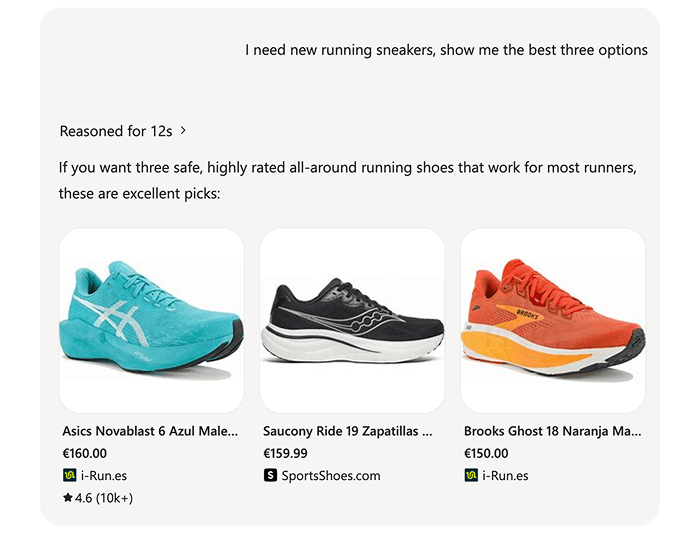
Right now, agentic commerce is mostly about discovery. Shoppers ask AI tools what to buy, the AI narrows down the options, and in most cases the shopper still finishes the purchase on the merchant’s site. Agents buying on their own is starting, but it’s early.
The biggest change isn’t new technology for merchants. It’s shopper behavior. People are starting their product research in AI tools instead of search bars and marketplaces.
3x growth in AI-driven orders to Shopify stores, year over year
62% growth in the share of US retail visits coming from AI tools, year over year
60% higher conversion rate for AI-referred retail visitors than other traffic
How agentic commerce works today
Right now, AI does the research and the shopper does the buying.
AI shopping assistants are now the first line of your sales team, but you don’t train them. They learn everything about your products from your product data.
The shopper asks for what they want. The AI compares options, suggests a few, and the shopper checks out on your site.
A few platforms, like Google AI Mode and Gemini, can already handle the purchase too.
The tricky part is tracking it. You might see the AI traffic but not the sales it led to.
What’s next for agentic commerce
Next, AI agents will handle the buying too.
The shopper sets the rules, like a budget, a brand, or a delivery date, and the agent orders within them. Payment companies are already building ways for agents to pay safely, like one-time card numbers that only work for a single purchase.
McKinsey estimates agentic commerce could influence $3 trillion to $5 trillion in global retail sales by 2030.
It’s still early, and many shoppers aren’t ready to hand an agent their wallet yet.
Whether an agent is recommending a product or buying it, it works from the same thing: your product data.
Where are shoppers using AI shopping assistants?
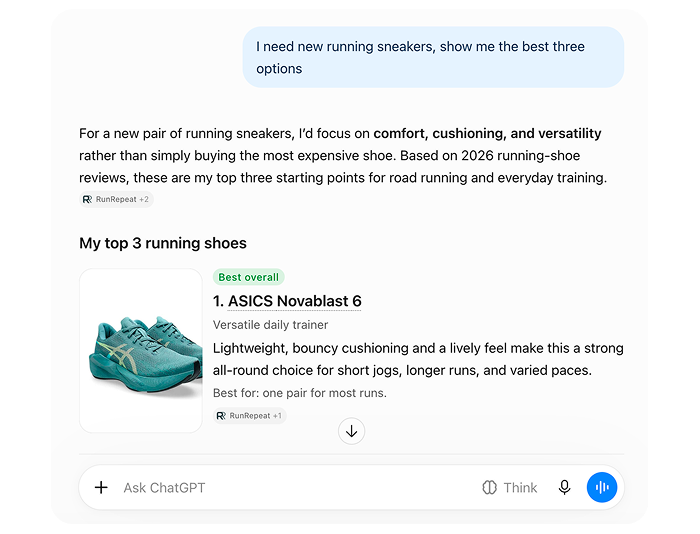
ChatGPT
Shopping inside the conversation
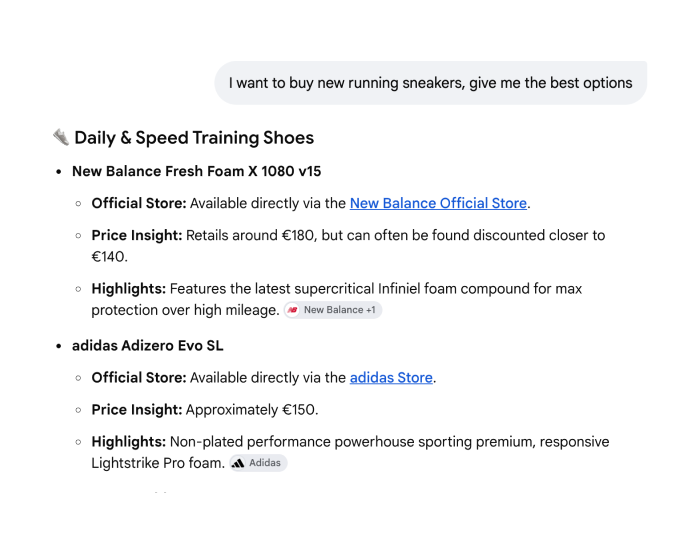
Gemini + Google AI Mode
AI shopping across search
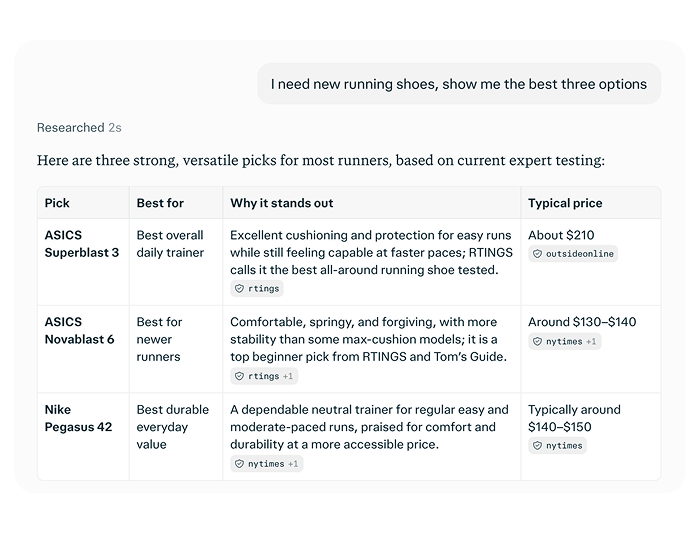
Perplexity
Research before you buy
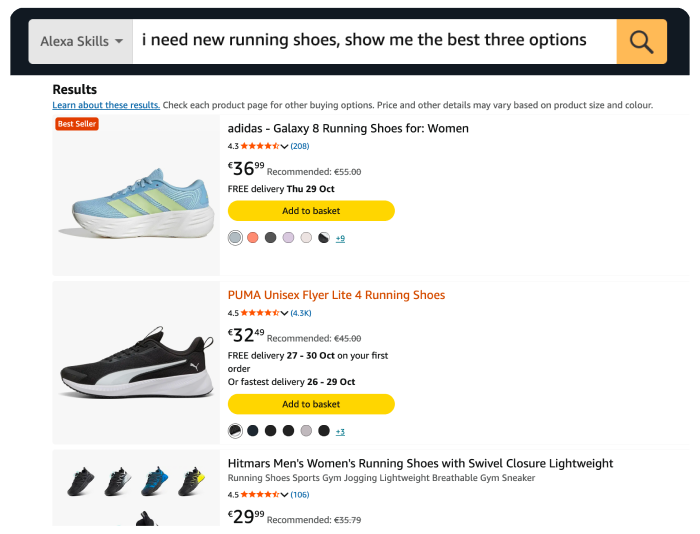
Alexa for Shopping
An agent inside the marketplace
Shopify Agentic Storefronts
Your catalog, sent to the agents
Microsoft Copilot
Shopping built into the assistant
For businesses, the common requirement is the same: agents need complete, accurate product data they can understand and act on.
How does agentic commerce work?
Agentic commerce works in five steps: the shopper asks, the agent finds matching products, compares them, helps complete the purchase, and follows up after the order. Every step after the first runs on your product data.
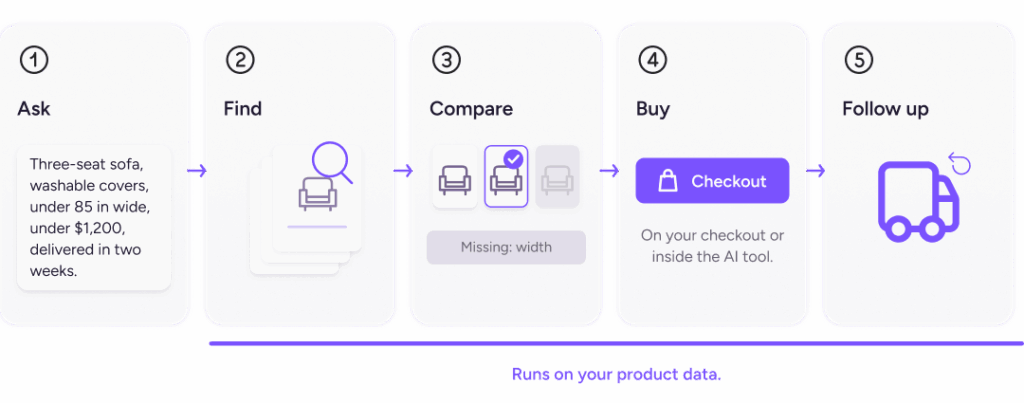
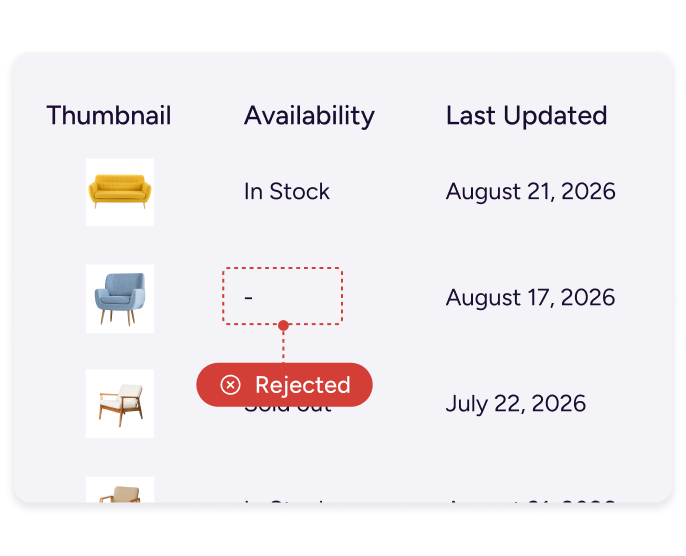
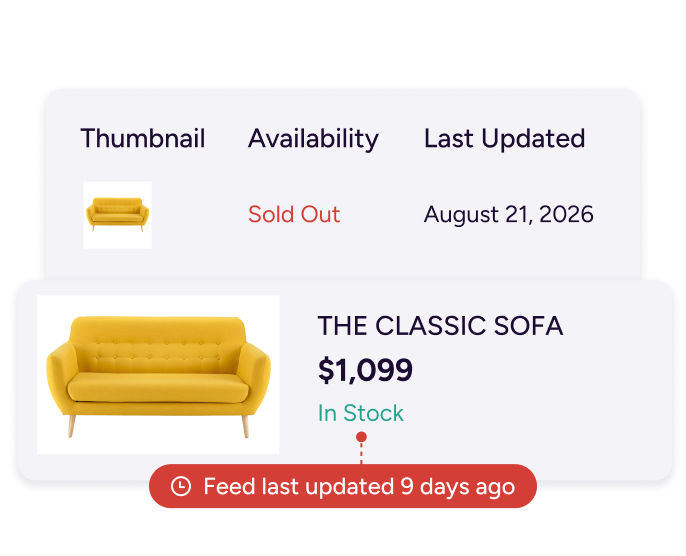
The big difference from regular ecommerce: a person can guess when a detail is missing. An agent can’t. It skips your product and moves on to one it can confirm.
Can AI agents buy my products today?
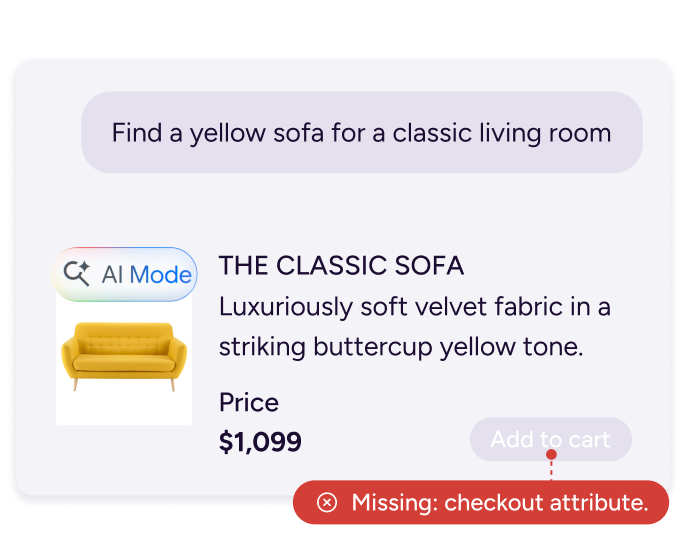
Sometimes, but usually not on their own yet. In most cases today, an AI agent finds and recommends your product, and the shopper finishes the purchase on your checkout. Buying fully inside the AI tool, called agentic checkout, is live on only a few platforms.
What about ACP, UCP, and the other protocols?
Protocols are the shared rules AI agents and online stores use to talk to each other. You’ll hear these names a lot, but you don’t have to build any of them yourself. On Shopify, Agentic Storefronts handles them for you. On other platforms, your ecommerce platform or payment provider usually does the heavy lifting.
What about payments? You don’t need a new payment setup. When an agent buys, it uses a one-time credential that only works for that purchase, that store, and that amount, so it never sees the shopper’s card number. Your payment provider handles it, and the order usually reaches you like any other sale.
Your job isn’t to build checkout. It’s to make sure the agent understands what you sell.
Why aren't my products showing up in AI shopping?
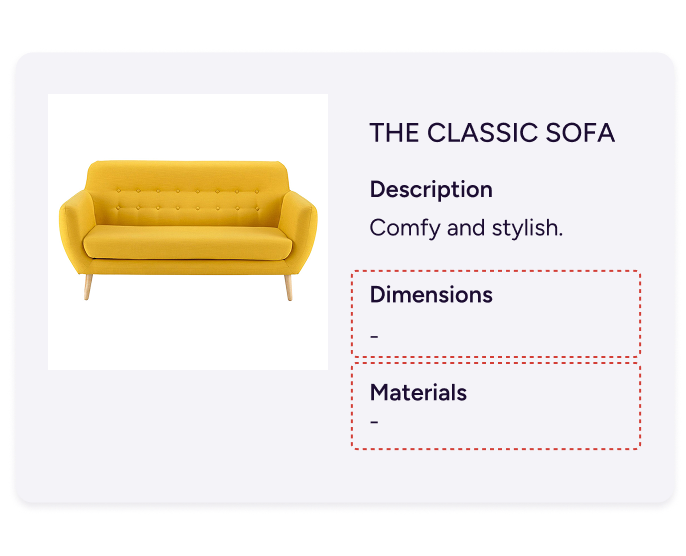
Here's what that looks like in practice. A shopper asks an AI agent for a sofa, and two stores sell the same one at the same price. Only one gets recommended.
THE SHOPPER ASKS
“Find me a three-seat sofa with washable covers, under 85 inches wide, under $1,200, delivered within two weeks.“
What product data do AI agents need?
A quick note on the benchmark:
The minimum: nine fields
1. Item ID: A unique identifier that tells the agent exactly which product it’s looking at.
2. Title: A clear, specific name for the product.
3. Description: The details that explain what the product is and what makes it relevant.
4. URL: Where the product can be found online.
5. Brand: The brand associated with the product.
6. Seller name: The business selling the product.
7. Image URL: A direct link to the product image.
8. Availability: Whether the product can currently be purchased.
9. Price: What the product costs.
What gets you chosen: attributes by category
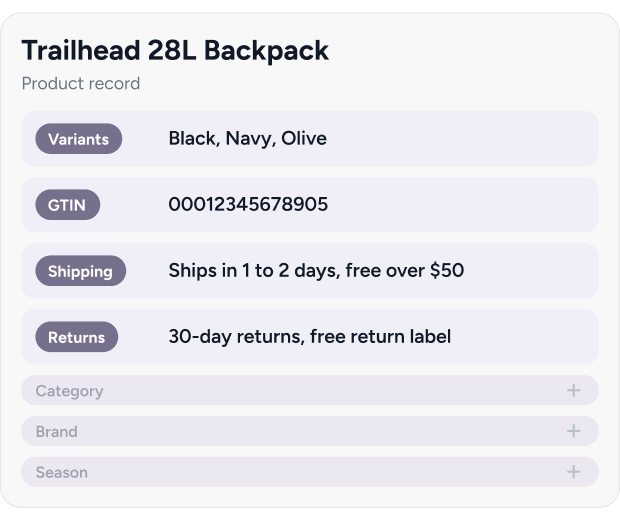
Every product
- Variants: Each size, color, or configuration as its own record, with its own stock.
- GTIN or MPN: Required for Google feeds unless you mark that the product doesn’t have one.
- Shipping times and costs: So agents can answer “Will it arrive by Friday?”
- Return policy: Return windows and conditions, in your feed and not just on a policy page.
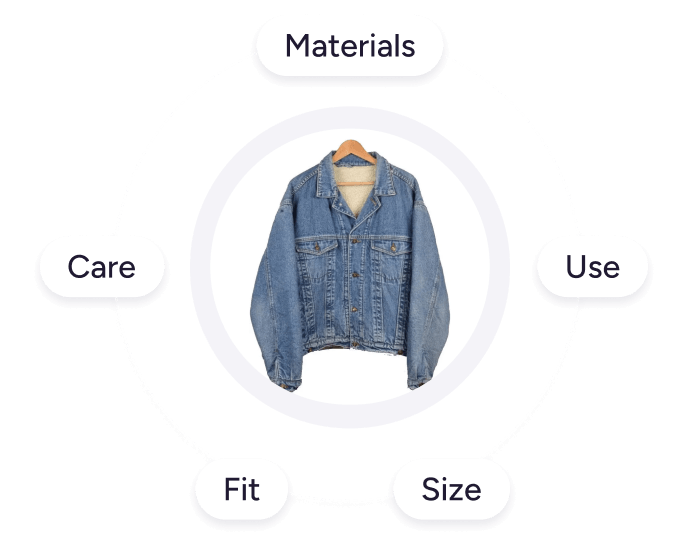
Apparel and footwear
- Size and fit: Sizes, widths, and fit type, like slim or relaxed.
- Materials: Fabric composition, like 100% organic cotton.
- Care instructions: Machine washable, dry clean only, and so on.
- Use or occasion: Running, work, formal, or outdoor.
Furniture and home
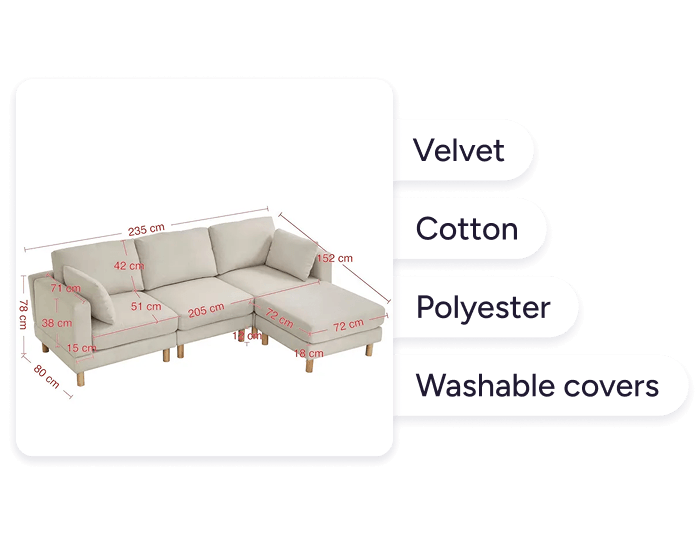
- Dimensions: Width, depth, and height, always in the same unit.
- Weight and assembly: How heavy it is and whether it arrives assembled.
- Materials and finish: Solid oak, powder-coated steel, performance fabric.
- Care and durability: Washable covers, outdoor-rated, pet-friendly.
Parts and electronics
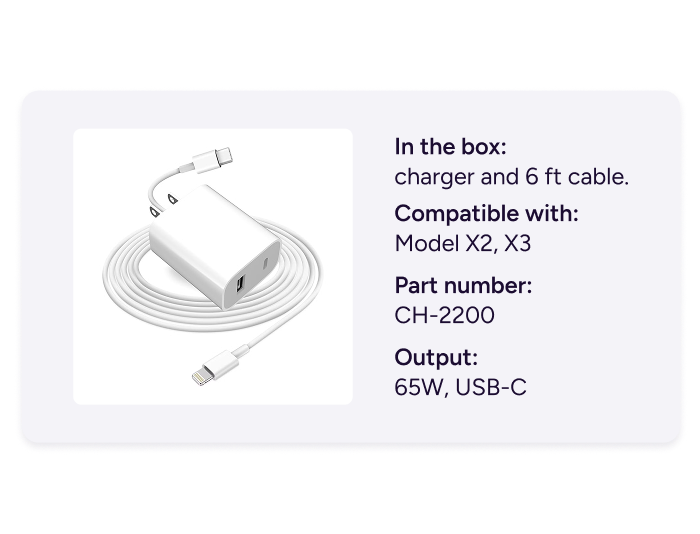
- Compatibility: Which models, devices, or systems it works with.
- Model and part numbers: So agents can match exact replacements.
- Technical specs: Voltage, capacity, connectors, and dimensions.
- What’s in the box: Cables, adapters, and accessories included.
Beauty and personal care
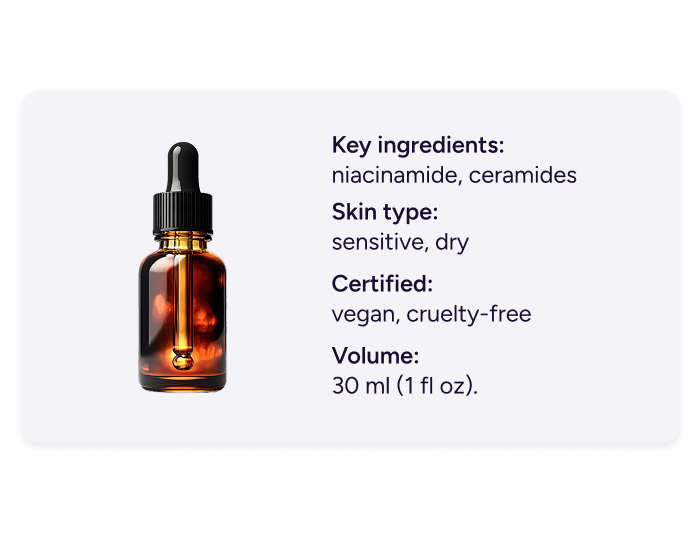
- Ingredients: The full list, plus key actives.
- Skin or hair type: Who the product is made for.
- Certifications: Vegan, cruelty-free, or dermatologist-tested.
- Size and volume: In consistent units, like ml or oz.
Is agentic commerce worth investing in now?
Why it's worth it
More shoppers find your products
An agent can only match a product to a request when the data clearly describes what it is. More complete attributes mean more chances to show up when shoppers want something specific.
Fewer products get skipped
When required information is missing, an agent can’t act on the listing. Complete records give more products a chance to be considered and bought.
AI-driven traffic converts better, and good data converts best
Shopify reports that AI searches powered by its structured product catalog convert at twice the rate of AI searches that rely on scraped data.
One dataset, every channel
The product information agents need overlaps with what marketplaces and ad feeds already require. This isn’t another tool to pay for. It’s data work that pays off everywhere you sell.
Why some teams are waiting
It's hard to measure
AI-driven visits don’t always show up as their own source in analytics, and attribution to revenue is messy. A skipped product leaves no error, no abandoned cart, and no traffic drop to explain it. You may never know you lost the sale.
Shopper trust is still forming
Shoppers are still deciding how much of the buying process they’re comfortable handing to an agent.
Liability isn't settled
When an agent makes the wrong purchase, responsibility isn’t always clear. The rules are still developing and vary by platform and payment method.
Legacy data takes work
Most product data was built for people browsing web pages, not machines reading structured records. Getting older systems and inconsistent data ready can take real effort.
How do you prepare your product catalog for agentic commerce?
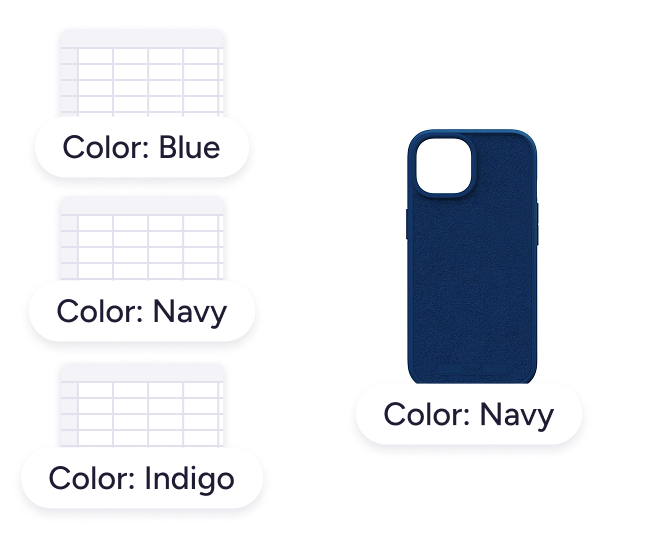
1. Centralize your product data
Keep one reliable version of every product in one place. Product details belong in a product information management (PIM) system, and images and files in a digital asset management (DAM) system, connected so they stay in sync. Today, many teams have a spreadsheet for the website, another for a marketplace, and whatever the ad feed was built from two years ago. Across 800+ commerce companies in Plytix’s 2026 Commerce Napkin, most still work this way.
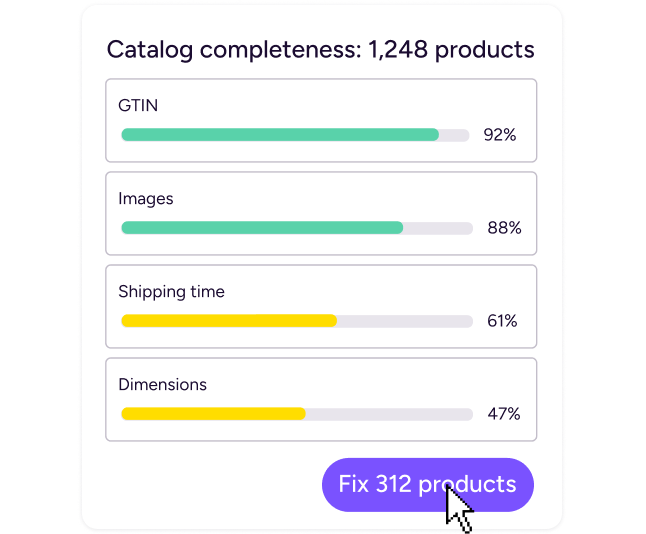
3. Check completeness product by product
Find missing information before an agent does. You should be able to see how many products are missing a GTIN, image, or other important attribute. If nobody can answer that without manually checking, that’s your gap.
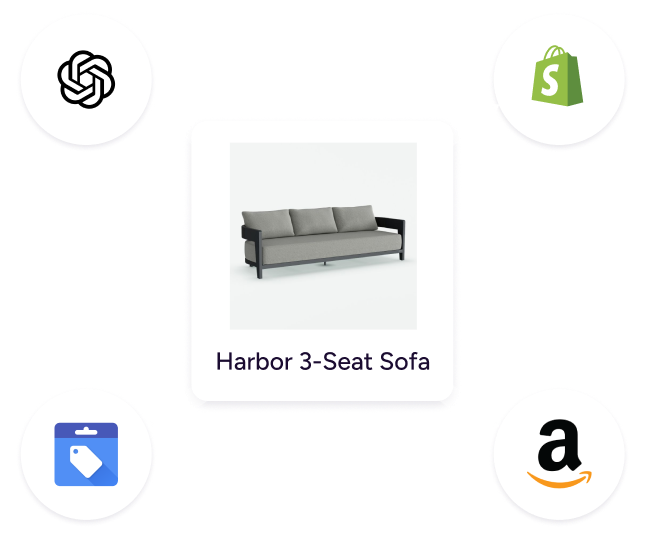
4. Send your data to the right channels
Push structured product data to the feeds, platforms, and protocols that use it. This is mostly plumbing, until something upstream changes and products quietly stop getting through. If you sell through marketplaces, their requirements now sit between you and the agent.
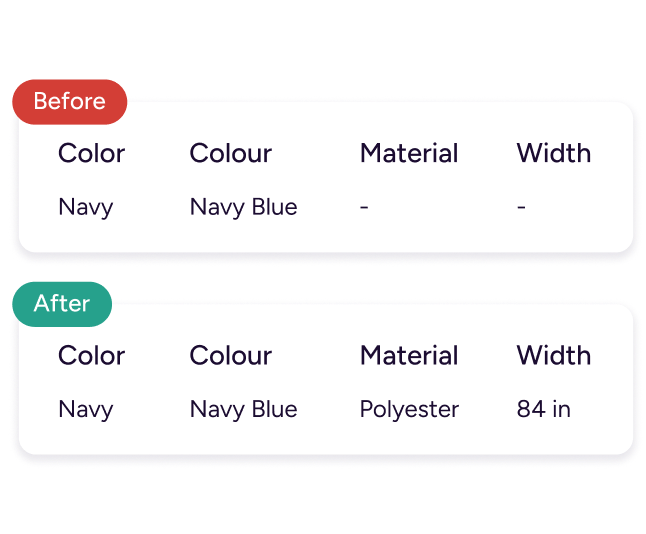
2. Enrich and standardize your attributes
Fill in the information agents need and keep it consistent. This is where the real work is. “Colour: Navy” and “color: navy blue” mean the same thing to a person, not to a machine. The Commerce Napkin puts it at 40 to 130 hours per 100 SKUs.
When do you need a PIM for agentic commerce?
At a certain scale, that breaks. Just the nine minimum fields across 5,000 products means 45,000 values to keep complete and consistent, before you add a single attribute, and often across several channels with changing requirements.
That's where a PIM comes in. It gives you one place to manage product data, Tenrich it with AI, find gaps, and send it to the channels that need it.
Nothing tells you when an agent skips you.
What is the future of agentic commerce?
Agents will do more of the buying
AI search and AI shopping will blur together
The standards will settle
Your product data becomes your storefront
FAQs
Agentic commerce is one use of agentic AI. Agentic AI is the broader idea of AI systems that take actions and complete multi-step tasks on their own. Agentic commerce applies that to shopping. You’ll also see “AI commerce” and “agentic ecommerce” used for the same or closely related ideas.
In ecommerce, the shopper searches, compares, and buys on your website. In agentic commerce, an AI agent does the searching and comparing for them, using your product data instead of your web pages. Ecommerce is optimized for people. Agentic commerce adds a second audience: AI agents.
Agentic commerce is open to brands of any size. Shopify’s Agentic Storefronts, for example, is on by default for eligible US merchants. Custom checkout integrations are still mostly an enterprise project, so smaller teams should focus on complete product data and use what their ecommerce platform already offers.
The shift is real, but the revenue is still early. The share of US retail visits coming from AI tools grew 62% year over year in July 2026, according to Adobe, and Shopify says AI-driven orders to its stores tripled. Fully autonomous buying is still rare, which is why most brands start with discovery.
Check the AI Assistant channel in Google Analytics 4, which Google added in May 2026 to group visits from AI assistants like ChatGPT, Gemini, and Claude. Watch Referral traffic too, since Google hasn’t published its full list of sources. On Shopify, the agentic section of the admin shows orders from AI channels.
AI agents favor complete product data, not big brands. They match products to a shopper’s request based on attributes like size, material, and price. A well-described product from a smaller brand can beat a household name with thin data.
ACP and UCP are both open standards for agentic commerce. The Agentic Commerce Protocol (ACP), from Stripe and OpenAI, focuses on how agents check out with a store. The Universal Commerce Protocol (UCP), from Google and Shopify, covers the whole journey, from discovery to checkout. If you’re on Shopify, Agentic Storefronts handles both for you.
Estimates range from hundreds of billions to trillions of dollars by 2030. McKinsey estimates agentic commerce could orchestrate $3 trillion to $5 trillion in global retail, and Juniper Research forecasts $1.5 trillion. In the US, Morgan Stanley estimates $190 billion to $385 billion and Bain $300 billion to $500 billion.