
What is a digital product passport?
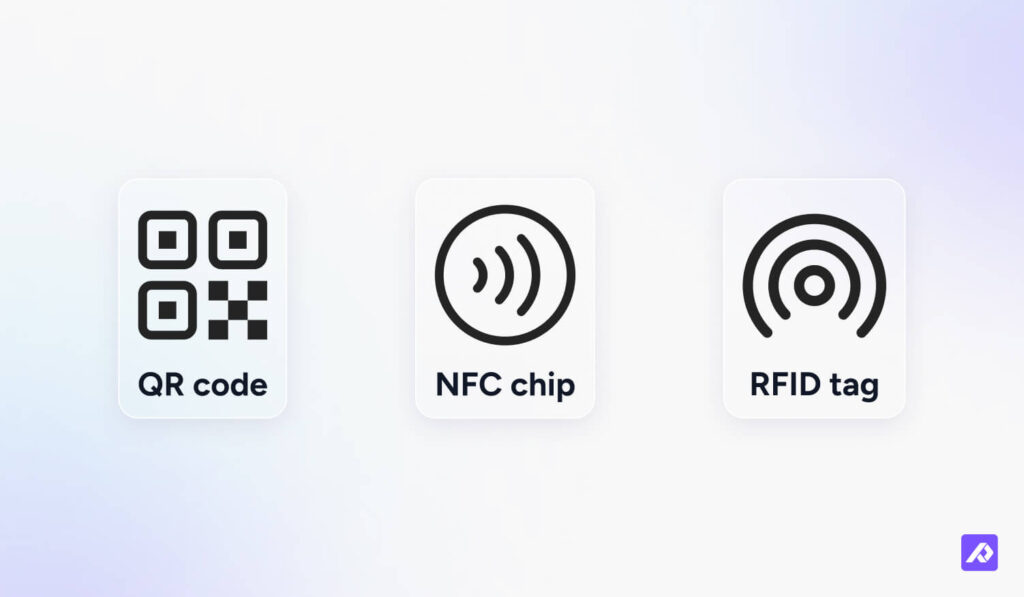
A digital product passport (DPP) is a digital record attached to a product that holds information about its materials, performance, sustainability, and end-of-life options. Shoppers, retailers, and regulators access it by scanning a QR code, NFC chip, or RFID tag on the product itself.
Your product already has a story: where it came from, what it's made of, how long it'll last. A DPP just makes that story official, standardized, and scannable.
Think of it as a product's digital memory. It can hold:
- Where a product was made
- What it’s made of
- How to repair it
- How to dispose of or recycle it once it’s done
If you sell into the EU, you'll run into this regulation by name: Ecodesign for Sustainable Products Regulation (ESPR). That's the law behind the DPP, and it's the EU's main tool for carrying out its Circular Economy Action Plan.
What is ESPR? The Ecodesign for Sustainable Products Regulation is the EU law that sets sustainability, durability, and circularity requirements for products sold in the bloc. The DPP is its main tool for making that information visible and checkable. You can read the European Commission's own DPP overview for the source material behind this page.
None of this is entirely new. You've probably already published some of this information yourself, in one form or another. What's changing is that the EU is standardizing the format and making it mandatory, sector by sector.
DPPs are typically built around three categories of information.
Performance
This looks like energy efficiency ratings, material use, and durability data that show how long your product is built to last. This is the data that lets your customers compare two products on more than price.
Sustainability
This includes the carbon footprint across your product's lifecycle, resource use like water and energy, and chemical safety documentation. This is the data regulators and sustainability-focused buyers care about most.
Circularity
This would be the repairability, spare parts availability, recyclability by material, and end-of-life handling. It’s the data behind the EU's broader Right to Repair push, and it's what keeps your product useful, or at least recoverable, after the first sale.
Why does a digital product passport matter?
A digital product passport matters for three reasons. The first one is that it will eventually be a legal requirement for selling into the EU. The second one is that it makes your product data visible to customers and regulators instead of sitting in an internal system. And third, getting that data organized now pays off regardless of exactly when your sector's deadline lands.
That second point is the one businesses underestimate. Once product data is customer-facing, gaps that were invisible in a spreadsheet become visible the moment someone scans a code, which raises the bar for how complete and accurate that data needs to be.
As Aslan Patov, founder and CEO of Renascence Consulting, told Retail Dive:
"If the data's messy or the interface is clunky, customers will ignore it. If it feels like legal paperwork, it dies on the spot."
That's true no matter what. A DPP is only as useful as the data behind it, and getting that data in order isn't wasted effort if a deadline shifts by a year. It's the same work worth doing anyway.
Is a digital product passport mandatory yet?
Not yet. The first mandatory passports start on February 18, 2027, and only for batteries under the EU Battery Regulation. For everything else, no ESPR sector has a locked enforcement date yet.
What's confirmed:
- The EU DPP Registry launched on July 20, 2026, the infrastructure businesses use to register unique product identifiers and the metadata tied to them.
- Registration happens through a web interface or an API.
- Registering gets you a secure proof of registration you can use to demonstrate compliance in B2B transactions.
What isn't confirmed yet: the specific delegated acts that set deadlines for individual sectors. Batteries are the one exception, with a deadline locked under the EU Battery Regulation. Textiles, furniture, and the rest of ESPR's priority sectors are still working through the process that will eventually set their own dates.
What are the digital product passport requirements?
If you're preparing for a DPP, you're typically looking at six categories of requirements:
- Product identity
- Materials and origin
- Sustainability data
- Performance
- Circularity
- Compliance documentation
The exact attribute list varies by product category, but here's the ground you'll most likely need to cover.
| Category | What it typically includes |
|---|---|
| Product identity | Product identifier (often a GS1 identifier like a GTIN), manufacturer or "economic operator" identifier, facility identifier, registration identifier (issued by the EU registry when you register) |
| Materials and origin | Raw materials, country of origin, supplier information |
| Sustainability data | Carbon footprint, water and energy use, chemical safety information |
| Performance | Durability, energy efficiency ratings, functional specifications |
| Circularity | Repairability, spare parts availability, recyclability by material, disposal instructions |
| Compliance documentation | Certifications, standards met, conformity declarations |
Three identifiers come up in every DPP: a product identifier, an economic operator identifier, and a facility identifier. When you register, the EU registry issues a fourth, the registration identifier.
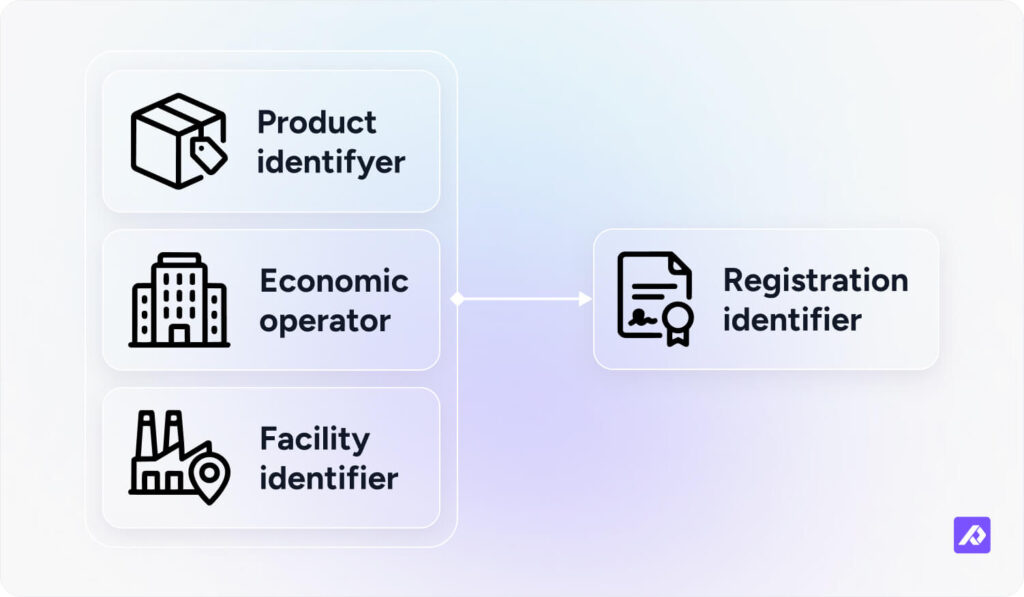
If you only prepare one thing before your sector’s requirements land, make it the first three. Every other DPP attribute you'll need connects back to those four.
DPP timeline: what's confirmed and what's still pending
Only one DPP deadline is locked: February 18, 2027, for batteries. Everything else depends on ESPR delegated acts, starting with iron and steel.
| Date | What happens |
|---|---|
| July 20, 2026 | EU DPP Registry goes live for registering product identifiers and metadata |
| Q4 2026 (indicative) | ESPR delegated act for iron and steel expected. Requirements apply at least 18 months after adoption. |
| February 18, 2027 | Digital passports mandatory for all electric vehicle batteries and industrial batteries over 2 kWh |
| Ongoing through 2027 and beyond | ESPR delegated acts for other priority sectors (textiles, furniture, ICT, and more) are drafted and adopted individually, each setting its own enforcement date |
| 2030 | End of the current ESPR working plan. Only product groups with an adopted delegated act need a passport. |
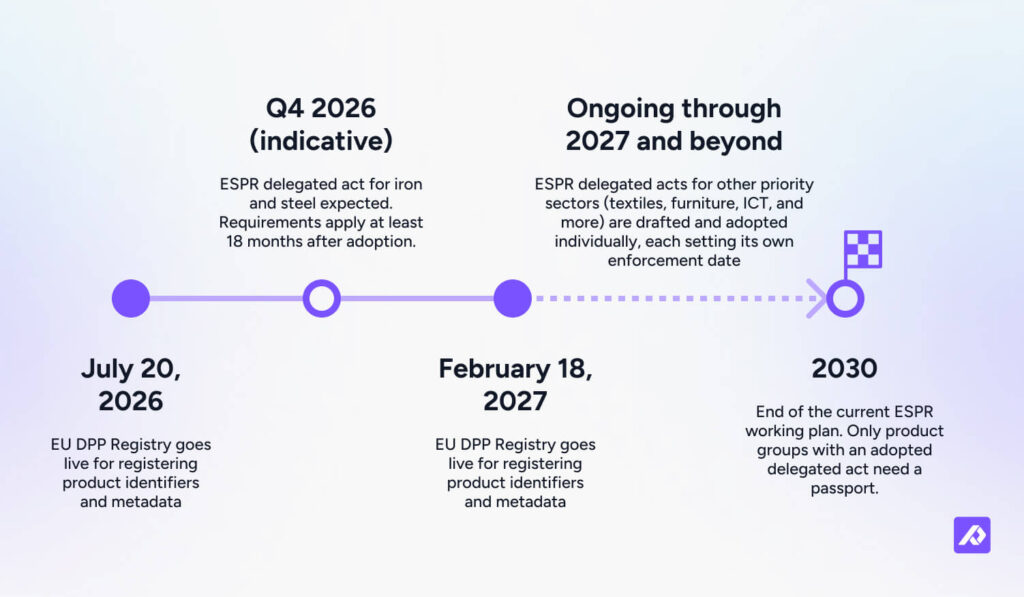
The pattern worth remembering: battery passports are locked in. Everything else is still being decided. If you read DPP content, including this piece, that gives you a firm date for textiles or electronics, it's ahead of where the actual regulation stands. Check the confirmed source before you make a business decision off any date you read.
Who does the digital product passport affect?
You're most likely affected if you sell into one of ESPR's priority sectors, the industries expected to get DPP requirements first:
- Batteries (first deadline: February 18, 2027, under the EU Battery Regulation)
- Iron and steel
- Aluminum
- Textiles (apparel; footwear is still under study)
- Furniture
- Mattresses
- Tires
- Electronics and energy-related products
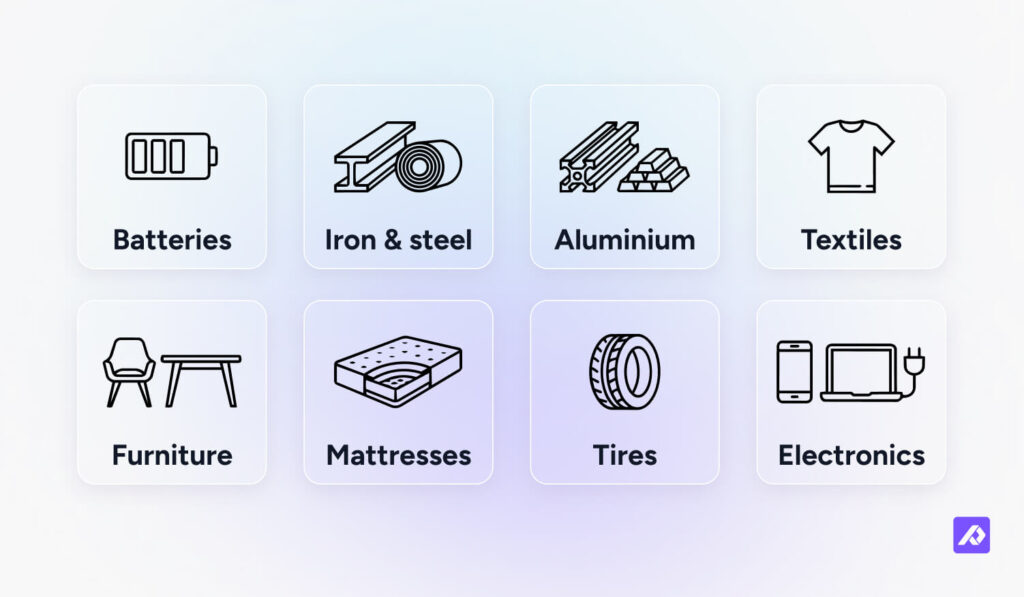
These sectors made the list because of their impact on the EU's climate, environmental, and energy goals, not because they're the easiest to regulate.
Geographically, this reaches further than "EU-based companies." Any business selling into the EU market has to comply, regardless of where it's headquartered or where its products are made. If a portion of your catalog ships to EU customers, DPP requirements will eventually apply to that portion, even if your company is based in the United States or elsewhere.
How do I prepare for a digital product passport?
You can prepare for the digital product passport in five steps:
- Centralize your product data
- Set up your data for DPP attributes
- Check your catalog’s completeness
- Set up an ongoing process
- Loop in your suppliers early
The good news is that preparing for a DPP isn't about starting from scratch. It's about getting your existing product data into shape so you can collect, manage, and share the information a DPP will require.
That means knowing where your product data lives, identifying what's missing, and putting a process in place to keep it up to date. The earlier you do this, the less likely you are to end up scrambling when requirements start applying to your products.
Here's a closer look at the five steps:
1. Centralize your product data first
Before you worry about DPP requirements, make sure you can actually find your product information.
Right now, your product data is probably spread across:
- Spreadsheets
- Supplier emails
- Someone’s inbox
If your data is scattered like that, it's difficult to create DPPs consistently or update them when something changes.
This is where a single source of truth (like PIM software) for your product data becomes important. You want one place where your teams can find the information they need and keep it up to date.
That also includes more than just structured product attributes. Certifications, compliance documents, and other supporting files need a home too. That's where a PIM with a built-in DAM system can help.
2. Set up your data in a way that matches what DPPs ask for
Once your product data is in one place, look at what information you'll need to provide.
Depending on your products and the requirements that apply to them, this could include things like:
- Materials
- Origin
- Performance metrics
- Repairability
- Disposal instructions
Map these requirements to the data you already have. Then make sure your product data structure has a place for each one.
If an attribute doesn't exist in your catalog today, flag it as a gap rather than trying to work around it later. Retrofitting new information onto your catalog is usually slower and messier than building it into your process from the start.
3. Fill in completeness gaps before they become compliance gaps
Now that you know what data you need, check how much of it you actually have.
Run a completeness check across your catalog:
- Which products have complete sustainability and materials data?
- Which products are missing key attributes?
- Where are you relying on suppliers or other teams for information?
This gives you a clear list of what needs attention instead of leaving you to discover gaps when you need the data for a DPP.
Note: In Plytix, the Completeness Attribute does this for you. It flags which products are missing key details and shows when a product has everything it needs.
Prioritize your ESPR-priority-sector products first, since those are the ones facing requirements soonest.
Tip: If your catalog spans multiple ESPR priority sectors, don't tackle them alphabetically. Start with whichever sector makes up the biggest share of what you actually sell into the EU. That's where deadline pressure will land hardest, whenever it lands.
4. Put a process in place, not just a one-off cleanup
Getting your product data into shape once isn't enough. Product information changes all the time: new suppliers come on board, certifications expire or get updated, and materials change.
Someone on your team needs to own this process and make sure DPP-relevant data stays up to date.
The goal isn't just to have accurate data when you first create a DPP. It's to have a reliable way to keep that information accurate as your products change.
5. Get your supply chain involved in the process early
A lot of the information you'll need for a DPP doesn't originate with you.
Your suppliers may hold information about:
- Raw material origin
- Supplier certifications
- Component-level sustainability information
So don't wait until you have a deadline to start asking for it.
Talk to suppliers early about what information you'll need, how they'll provide it, and how often it needs to be updated. That gives everyone time to work out the process before the data becomes a compliance requirement.
What's on a digital product passport checklist?
A digital product passport checklist should help you answer one simple question: Are we ready to create and maintain DPPs for our products?
Use these eight checks to find out:
- Can you find all your product data in one place? Your product information should be easy to find without digging through spreadsheets, emails, and supplier documents.
- Do you have the right product identifiers? Make sure you can identify the product, economic operator, facility, and registration where required.
- Can you trace materials and their origin? You should know what your products and components are made from and where those materials come from.
- Do you have somewhere to store the sustainability data you’ll need? Your product data should have a clear place for information such as carbon footprint, resource use, and chemical safety.
- Can you provide repair and end-of-life information? You should have actual product information on repair, reuse, recycling, and disposal, rather than relying on general sustainability claims.
- Do you know what’s missing from your catalog? Check your products for gaps in DPP-relevant information, with particular attention to products in ESPR priority sectors.
- Is someone responsible for keeping the data up to date? You need someone responsible for updating DPP information when suppliers, materials, certifications, or other product details change.
- Can you get the information you need from suppliers? You should have a clear way to request, collect, and update DPP-relevant information from your suppliers.
If you can answer yes to all eight, you're in a much stronger position to create and maintain digital product passports without scrambling to find missing information later.
But getting your data into shape is only part of the job. You also need somewhere to manage that information as your products, suppliers, and requirements change.
How does Plytix PIM help with DPP compliance?
Plytix PIM gives you one place to store, structure, and maintain the product data you'll need for digital product passport requirements.
Preparing for a DPP isn't something you do once and forget about. Your product data changes constantly, so you need a system that can keep that information organized and up to date.
With Plytix PIM, you can manage DPP-relevant information such as:
- Materials and origin data
- Certifications and compliance documents
- Sustainability attributes
- Repairability and end-of-life information
Keeping this information in one place makes it easier to spot gaps, update product data, and give your teams access to the information they need. It also gives you a more reliable way to maintain that data as products, suppliers, materials, and certifications change.
When DPP requirements apply to your products, you'll have a much stronger data foundation to work from.

And the work you do to get your product data ready for DPPs doesn't stop there. The same product data can support your other channels too, like Shopify, Amazon, and even agentic commerce.
The goal isn't just to prepare for one new requirement. It's to build a product data foundation you can keep using as your catalog and the way people buy products evolve.
Reading about DPP readiness is great. Seeing what it looks like in your own catalog is even better.
Frequently Asked Questions
DPP stands for digital product passport. It is a digital record of product information, including data about materials, sustainability, and circularity. The EU is introducing DPP requirements through the Ecodesign for Sustainable Products Regulation (ESPR).
A digital product passport (DPP) is the EU-regulated system for sharing specific product information under ESPR. The term “product passport” can also be used more generally to describe a digital record of product information, without referring to the EU’s specific DPP requirements.
Yes. You can use existing product data for a DPP if you have the information required for your products and can structure and maintain it properly. If your data is scattered across spreadsheets, emails, and supplier documents, you’ll need to bring it together first. A PIM system can help you centralize and manage that product data.
A product that needs a DPP can’t be legally placed on the EU market without one. For batteries, that applies from February 18, 2027. For ESPR products, customs will check the product’s registration identifier before releasing imports.
Yes, non-EU companies need a digital product passport if they sell in the EU.
No. The EU stores identifiers and metadata only. The passport data stays with you or your service provider.
A DPP can be accessed through a data carrier such as a QR code, NFC tag, or RFID tag linked to the digital record. The information available can vary depending on the product, the applicable requirements, and who is accessing the data.