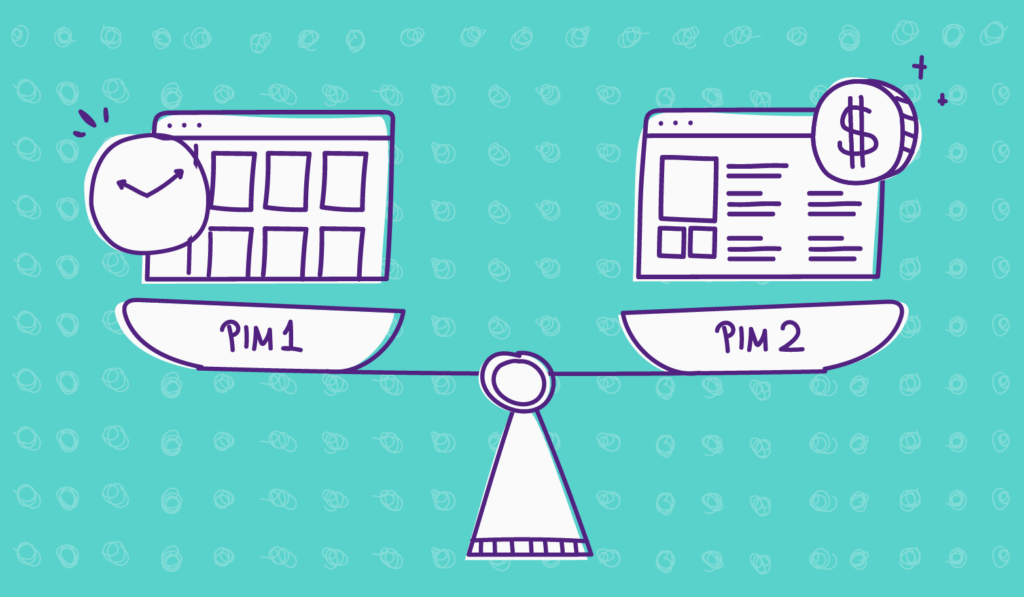
The first thing you look for when buying a PIM is usually the last thing you find: the price. Many vendors (especially at the enterprise end) keep pricing behind a sales call, so you can't really compare options without booking a demo first. While others actually provide transparent PIM pricing without any hidden costs.
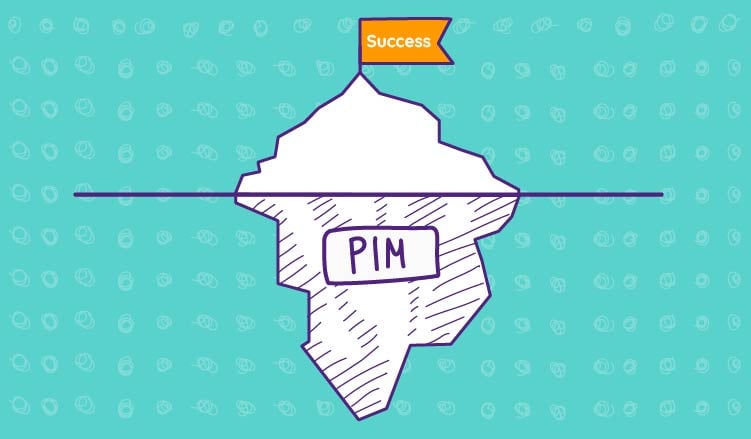
Either way, the number you land on may just be the starting line. The subscription is one piece of PIM pricing, and the real cost depends on your setup, plus the fees that never make it onto the pricing page at all.
To find out what PIM software really costs, we'll start where every buyer does: the number itself.
How much does PIM software cost?
Product information management (PIM) software generally costs anywhere from $0 to $5,000 a month. Although enterprise platforms are a different story, usually $25,000 to $90,000 or more a year, and almost always on a custom quote.
So why such a big range?
Because product information management pricing depends on you, not a fixed sticker. No two catalogs are alike, and what you pay mostly comes down to three things:
- The number of products (SKUs) you manage: the more you have, the higher your tier.
- The number of people who need access: some tools charge per user (some, like Plytix, don’t).
- The number of channels you sell on: every extra channel adds work, and usually cost.
Here's how that plays out across the three tiers most PIMs offer:
| Tier | Typical price | Catalog size | Best for |
|---|---|---|---|
| Entry-level | $0 to $1,000 per month | Under 5,000 SKUs | Small catalogs and first-time PIM buyers |
| Mid-market | $1,00 to $5,000 per month | 5,000 to 50,000 SKUs | Growing catalogs across multiple channels |
| Enterprise | $25,000 to $90,000+ per year (custom quote) | 50,000+ SKUs | Complex catalogs with many users and integrations |
These are typical market ranges, not fixed prices. But here's the catch: whatever plan you choose, that price is just the sticker. What you actually pay is your total cost of ownership (TCO): the subscription plus setup, add-ons, and the hours your team spends keeping it running. We’ll cover more about that later on.
What enterprise PIM pricing actually looks like
Enterprise platforms (like Akeneo, Salsify, and Inriver) don't publish pricing. Quotes are custom, so you won't get a number without booking a demo. Budget $25,000 to $90,000 or more a year if you're evaluating at that level, and expect implementation to add significantly on top. That's not a red flag. It just means you can't comparison-shop until you're already talking to sales.
Pricing is just one piece of choosing a PIM. Our free PIM Buyer's Guide covers the rest.
PIM pricing models: SaaS, open-source, and on-premise
When comparing PIM pricing, you first need to understand how the PIM is sold and hosted. That shapes what you actually pay for, whether it's a simple monthly subscription or a mix of hosting, developers, and maintenance. In practice, it comes down to three common setups.
SaaS (the cloud subscription)
The default for most teams today, from small brands to large enterprises. You pay a monthly or annual subscription. Plytix (in case you're wondering) is a SaaS PIM. Here's what that actually looks like:
- Hosting: the vendor hosts it. You log in through a browser, like Shopify or Gmail. No servers, no infrastructure bill.
- Dev involvement: none needed to start. Pre-built integrations connect to your store or ERP without writing any code.
- Maintenance: the vendor pushes updates automatically. New features just show up, nothing to install.
Within SaaS, there are a few ways of charging:
- Tiered plans: you pay more as you unlock higher SKU counts, users, or features. Easy to budget, easy to scale.
- Usage-based: your price flexes with metrics like SKUs, API calls, or storage.
- Per user or per seat: you pay for each person who needs access, so team size matters.
- Free tier: a handful of PIMs (Plytix included) offer a genuinely free plan to start.
- Add-ons: optional extras like a DAM or extra channels, billed on top.
Open-source (free to download, not free to run)
The software itself is free, or close to it, and you can customize it however you like. The catch: you're on the hook for running it yourself, from hosting and setup to developer time and ongoing maintenance.
It works well if you have strong in-house tech resources and complex needs. Without them, it tends to be slow to set up and pricier than it looks. Here's what that costs in practice:
- Hosting: you rent a server, typically $100 to $500 a month depending on catalog size, separate from what you pay the vendor.
- Dev involvement: a developer installs, configures, and connects it to your ERP, store, and channels, then returns whenever something breaks or needs updating. Budget $5,000 to $20,000 upfront, plus an ongoing retainer.
- Maintenance: every patch, upgrade, and fix is on your team to catch and apply. Miss one, and you’re running outdated software until someone notices.
On-premise (hosted on your own servers)
You pay a one-time license fee upfront, then host it on your own servers. It's increasingly rare, and mostly makes sense for regulated industries or teams that need tight control over their data. Broken down:
- Hosting: you own the physical servers: hardware upfront ($10,000 to $50,000+ depending on scale), plus ongoing electricity, storage, and network costs.
- Dev involvement: an internal IT team or managed service provider keeps servers running, handles failures, and manages backups, plus the same setup and integration work as open-source.
- Maintenance: your team runs the infrastructure, and the vendor charges 15 to 25% of your license fee per year for updates and support. On a $100,000 license, that’s $15,000 to $25,000 a year before internal costs.
Here's how the three stack up:
| SaaS | Open-source | On-premise | |
|---|---|---|---|
| License | Monthly or annual subscription | Free or low-cost core | One-time upfront fee |
| Hosting | Included | You pay | You pay |
| Implementation | Low to moderate | High | High |
| Maintenance | Included | You manage | 15 to 25% of license per year |
| Customization | Limited to moderate | High | High |
| Upfront cost | Low | Moderate to high | High |
| Best for | Most teams, SMB to enterprise | Technical teams with complex needs | Regulated or data-sensitive teams |
| Time to value | Weeks | Months | Months to years |
For most growing commerce teams, SaaS wins on speed and predictability, which is why it's where most of the market has landed.
What affects PIM pricing?
Two vendors can quote very different prices for what looks like the same PIM. Here's what actually moves the number:
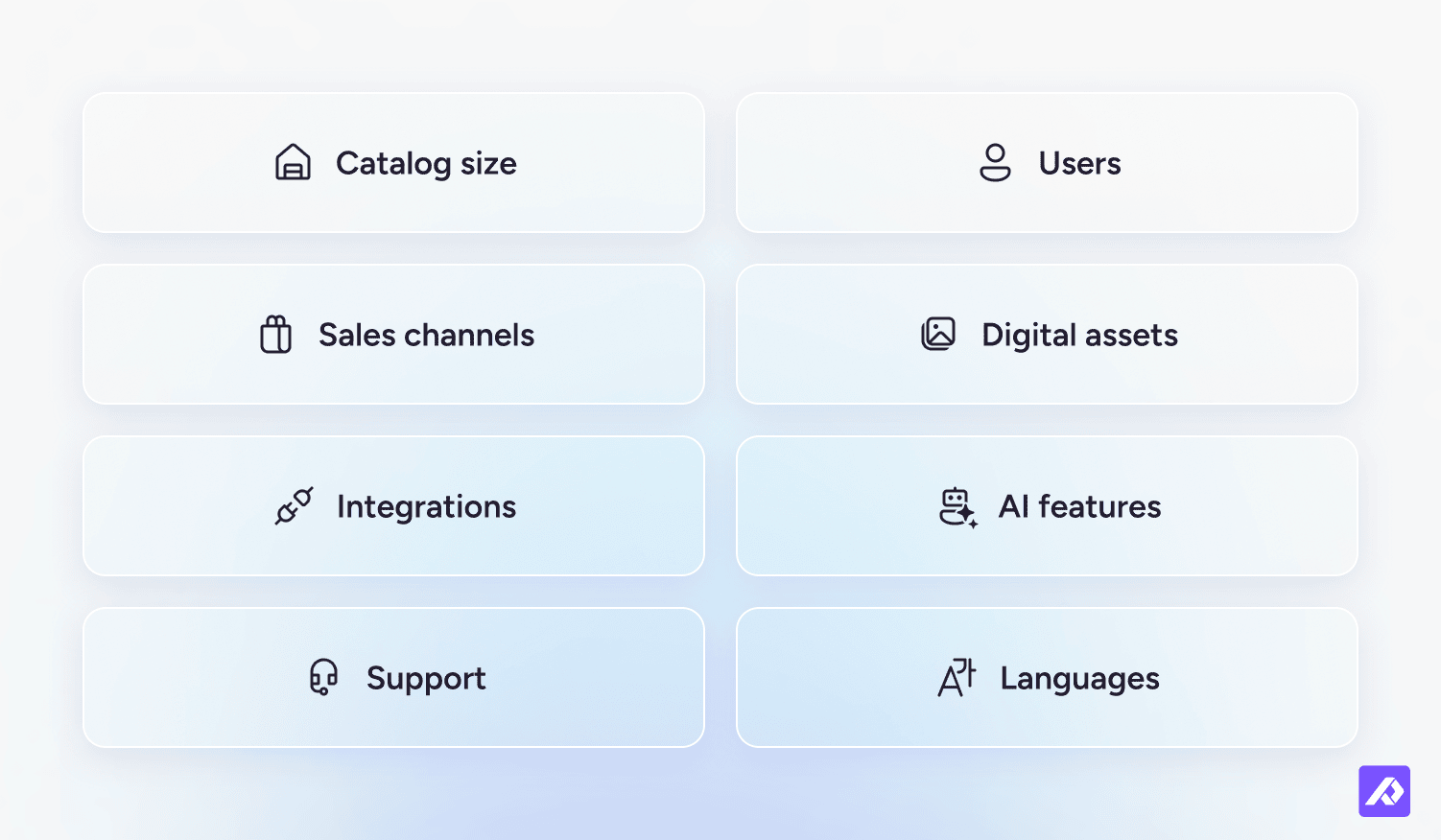
- Catalog size (SKUs): the biggest driver. More products, higher tier.
- Users: some tools charge for each person who needs access.
- Sales channels: every place you publish adds cost.
- Digital assets (DAM): images and video take up storage, and storage isn’t always free.
- Integrations: connecting your ERP, store, or marketplaces can cost extra.
- AI features: often an add-on rather than included.
- Support: faster, premium support usually sits in higher tiers.
- Languages: selling in more than one language often needs extra setup.
For any of these, ask the vendor the same question: is it included at my tier, or does it cost more?
What are the hidden costs of a PIM?
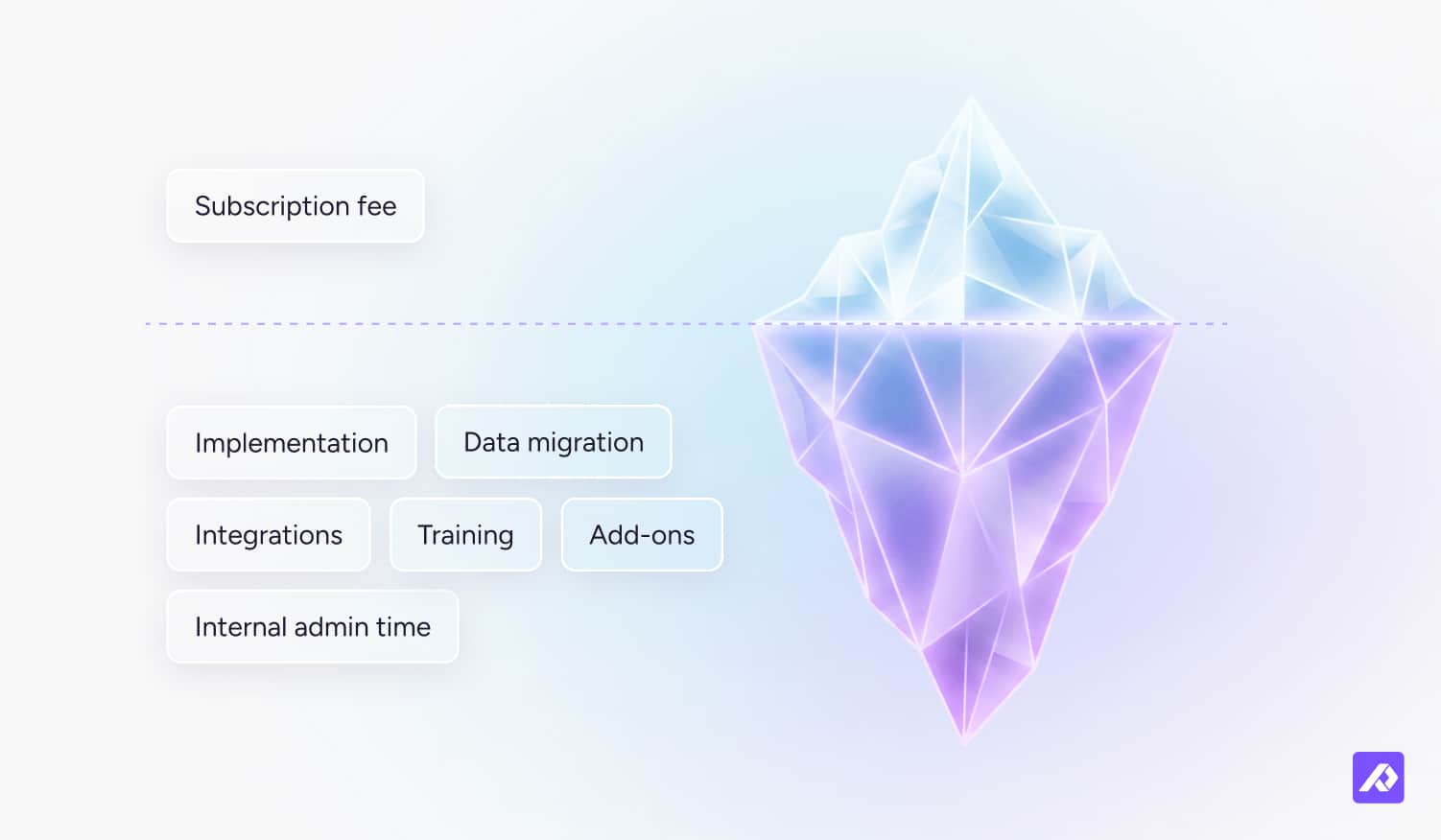
The hidden costs of a PIM are everything beyond the subscription: implementation, integrations, and the time it takes to run. None of them show up on the pricing page, but together they can quietly add up to more than your first year of license fees. Here's where they tend to hide:
| Hidden cost | When it hits | Typical range |
|---|---|---|
| Implementation and onboarding | Setup, year one | $0 to $30,000+ (a flat fee or a percentage of your contract) |
| Data migration and cleanup | Before launch | $5,000 to $30,000+, more if your data is messy |
| Custom integrations | Pre-launch, then ongoing | $3,000 to $20,000+ per integration |
| Consultants or implementation partners | Setup to go-live | $4,000 and up, depending on scope |
| Training and change management | Year one | Sometimes included, sometimes a paid add-on |
| Add-ons unlocked later | Ongoing | Monthly fees for AI, extra channels, or storage |
| Internal admin time | Ongoing | No line item, but real: the hours your team spends every week |
This is exactly why the cheapest plan can turn out to be the priciest. A low sticker price with heavy setup fees and constant admin time can cost you more than a slightly pricier tool that just works.
How do you calculate PIM ROI?
To calculate your PIM ROI, compare the value it creates against what it costs, using one formula:
ROI = (value gained − total cost) ÷ total cost
Here's how to fill in both sides for your own business:
- Add up the full cost. The subscription plus setup, integrations, add-ons, and the hours your team spends running it. (The TCO checklist below makes this quick.)
- Put a number on the value. Add up your time saved (hours won back times an hourly rate), fewer errors (the returns and rework you avoid), and faster launches (products live sooner, so sales come sooner).
- Run the formula. Subtract cost from value, then divide by cost. Anything above zero means the PIM is paying for itself, and the higher the number, the faster it pays back.
To put real numbers on that time, look at what the manual work actually costs. Plytix's 2026 Commerce Napkin benchmarks tracked exactly that.
Enriching, formatting, and publishing 100 products across every channel takes 30 to 150 hours of hands-on work, depending on your industry and catalog size. That works out to $630 to $3,150 in labor per 100 products. A PIM turns those weeks into hours.
A PIM ROI example
Let's take a look at what this could look like in practice. Say your total cost is $12,000 a year, and your team wins back 20 hours a week worth $30 an hour:
- Value gained: 20 hours a week at $30, about $31,000 a year
- Total cost: $12,000 a year
- ROI: ($31,000 − $12,000) ÷ $12,000, or about 160%
And that's before you count a single avoided error or faster launch.
“I've sat in a hundred of these calls. The cost buyers miss isn't the hours spent. It's the products that launch late because someone is still stitching together data from multiple systems instead of getting new items live.”
— Larry Oxley, Commercial Director at Plytix
Real results: Leigh Country
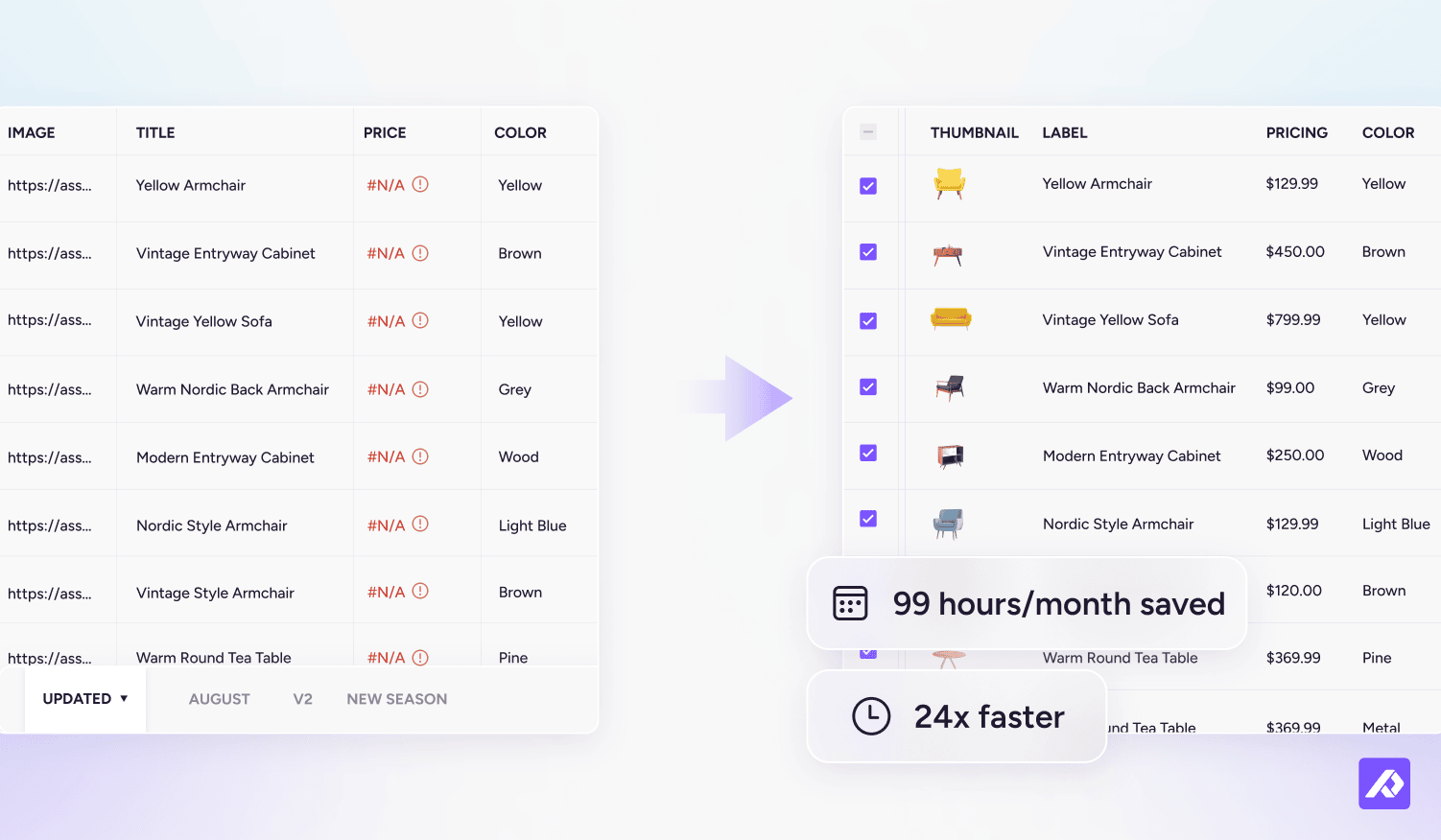
Leigh Country, a family-owned furniture brand with 8,000+ SKUs, used to run everything out of one master spreadsheet, where a single typo could snowball across every sales channel. After moving to Plytix, they won back 99 hours a month and now get products to market 24 times faster.
Every team values its time differently, so use your own rate: 99 hours a month is a serious number on the value side of the formula. And that's before the faster launches and the errors they no longer have to chase down.
“With Plytix as a central source of truth, we can get products to market 24x faster!”
— Kathie Rieser, Ecommerce Manager at Leigh Country
Budgeting for a PIM: total cost of ownership
Your real cost isn't the subscription. It's the total cost of ownership: every dollar and every hour the PIM costs over the time you use it. You've seen most of these pieces already, so here they are in one place to total up for each vendor:
- Subscription, at the tier you’ll grow into, not just today’s
- Implementation and onboarding
- Integrations to your ERP, store, and channels
- Data migration and cleanup
- Training for your team
- Support tier
- AI and add-ons
- Internal admin time to run it
Add those up per vendor, and you'll see the true PIM cost (not prices that don't tell you the whole story). For a closer look at the tools themselves, check out our best PIM software article.
Before you sign
That's the real ROI question. Not what a PIM costs, but what it earns you back.
Two things that won't show up on a quote but can cost you later:
- Data portability: can you export your product data freely if you ever leave? Locked-in data is a hidden switching cost.
- Contract terms: check the commitment length, auto-renewals, and what it takes to exit. Longer contracts often trade flexibility for a lower price.
How Plytix approaches pricing and value
Plytix approaches pricing with two things in mind: transparency and value. The plans are published right on the site, so you can budget before you ever talk to sales, and what you pay reflects what you actually get.
What Plytix costs
Three plans, all with unlimited users and no contract:
| Plan | Price | Best for |
|---|---|---|
| Standard | Free | Small catalogs, first-time PIM buyers |
| Pro | $499/month | Growing catalogs, multiple channels |
| Enterprise | Custom quote | Large or multi-brand operations |
Then add only what you need:
| Add-on | Price | What's included |
|---|---|---|
| Shopify and BigCommerce connections | Free | Direct channel sync with guided onboarding |
| Brand Portals | Flat monthly fee | Unlimited digital product catalogs, always up to date |
| Product Data Sheets | Flat monthly fee | Automatically generated and updated product PDFs |
| Product feeds and retailer templates | Flat monthly fee | Unlimited feeds (CSV, XML, NDJSON) plus 150+ marketplace templates |
Every price is on the pricing page, out in the open.
Lower cost, less complexity
The sticker price was never the whole story. What matters is what a PIM actually costs you once it's up and running, and that's where Plytix keeps things light:
- Starts free, and never per seat. Begin free, scale when you’re ready, and add your whole team without watching the bill balloon.
- Human support, always included. No premium tier, no expiration date.
- No contracts, fast setup. Month to month, cancel anytime, and most teams get going without an army of consultants.
Add it up and you get enterprise-grade PIM, DAM, feeds, AI, and channel readiness without the enterprise complexity or the price tag. That's the best overall PIM for growing commerce teams: more capability, lower cost, less complexity.
PIM pricing questions to ask before you buy
As we’ve seen, not all PIM pricing is what it looks like on paper. Before you sign anything, make sure to get clear answers to these six questions, so you know the actual cost.
- Is pricing per user or flat? Per-user pricing compounds fast as your team grows. Know what you’re committing to.
- What does implementation include, and what costs extra? Some vendors include onboarding. Others charge $10,000 to $30,000 before you’ve published a single product. Get the full scope in writing.
- Can I export my product data if I leave? Data portability varies widely. Make sure you can take your catalog with you, in a usable format, without extra fees.
- What does support cover, and is it included? Some tools charge extra for priority support or cap how much help you get. Find out before you need it.
- How does my price change as I grow? Ask specifically what happens when you cross a SKU tier, add a channel, or bring on more users.
- Is there a free plan or trial before I commit? A genuine free tier or trial period tells you more about the product than any demo will.
PIM pricing looks simple on the surface, and rarely is. Once you know what you're actually paying for and ask the right questions before signing, you can compare vendors on real value, not just the sticker price.
Plytix pricing is all upfront.
No hidden fees, no surprises.
Frequently Asked Questions
Yes, a few PIMs offer a genuinely free plan, though most cap the number of SKUs, users, or features. Plytix, for one, has a free plan with 500 SKUs and unlimited users, which is an easy way to start without committing budget upfront.
Yes, a few PIMs offer a genuinely free plan, though most cap the number of SKUs, users, or features. Plytix, for one, has a free plan with 500 SKUs and unlimited users, which is an easy way to start without committing budget upfront.
Implementation can range from $0 to $30,000 or more, depending on the tool and how complex your setup is. The costs usually come from onboarding, data migration, custom integrations, and training. Simpler SaaS tools often need little or no paid setup, while enterprise systems can cost as much to implement as they do to license in year one.
For most growing brands, yes. A PIM pays off through time saved on manual data work, fewer listing errors, and faster product launches, which show up as lower costs and more sales. To know for sure, run your own ROI: weigh those gains against the full cost, not just the subscription.
Many enterprise vendors keep pricing off their site because their quotes are custom and tied to a sales process. It isn’t necessarily a red flag, but it does make early comparison harder. Knowing your SKU count, channels, and must-have features before a demo helps you get a straight answer faster.
Plytix starts free, Pro is $499 a month, and Enterprise is a custom quote. Every plan includes unlimited users and no long-term contract. Any add-ons are priced up front. See the full breakdown on the Plytix pricing page.